Winged Bean
Psophocarpus tetragonolobus
Winged bean is a vigorous tropical climber with frilly-edged four-winged pods, pretty blue flowers and edible leaves, flowers and tubers. Every part of the plant can be eaten, and it thrives in hot, humid weather.
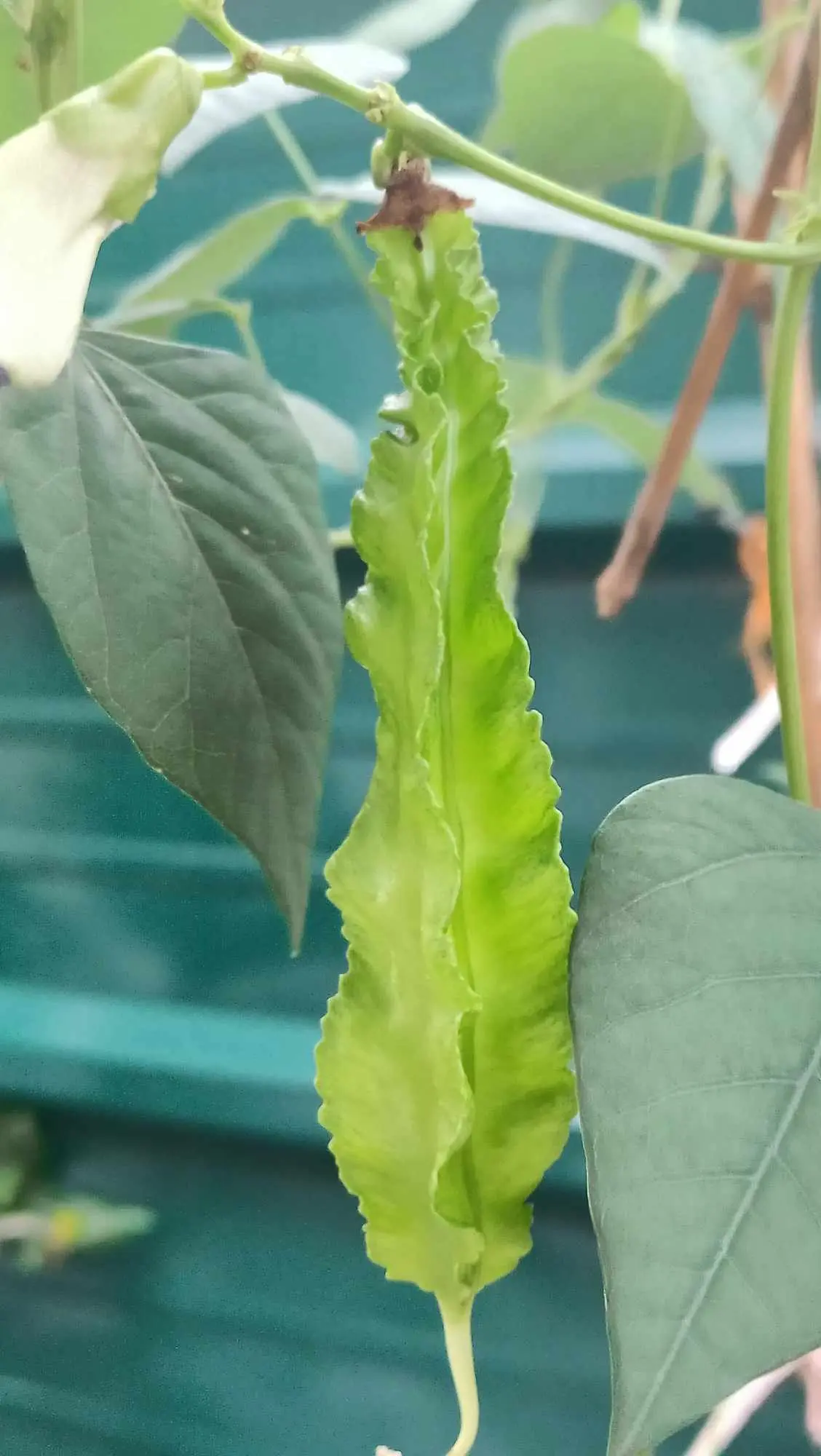
Photo: Bim24 · CC0, via Wikimedia Commons
Essential Care Requirements
Light
Full sun
Watering
Moderate
Keep the soil evenly moist during growth and flowering. It does not tolerate waterlogging or drought.
Soil
Fertile, well-drained loam with plenty of compost; pH 5.5 to 7.0.
Temperature and humidity
18–38 °C · High humidity
Feeding
Mix in compost at planting. It fixes its own nitrogen, but a phosphorus and potassium feed helps pods form.
Pruning and propagation
Propagate by seed
Pinch the main tip when the vine reaches the top of its support to encourage side shoots.
Cook the mature seeds well before eating. Young pods, leaves and flowers are eaten cooked or raw.
Top Cultivation Tips
Soak seeds overnight before sowing, as the coat is hard.
Give a strong trellis or fence at least 2 m tall.
Pick pods while still tender, under 15 cm long.
Harvest regularly to keep the vine flowering.
Common problems
Aphids
Small, soft-bodied insects that cluster on new shoots and buds, sucking sap and leaving sticky honeydew behind.
How to treat it →DiseaseLeaf spot
Fungal or bacterial infections that cause brown, black or purple spots on leaves, often with a yellow halo, leading to early leaf drop.
How to treat it →DiseasePowdery mildew
A fungal disease that coats leaves, buds and young shoots with a white, flour-like dust, weakening the plant and spoiling flowers and fruit.
How to treat it →PestRoot-knot nematodes
Microscopic soil worms that invade roots and cause knobbly swellings, leaving plants stunted and prone to wilting.
How to treat it →