Watermelon
Citrullus lanatus
Watermelon is a sprawling summer vine grown for its large, juicy fruit. Small "icebox" varieties suit grow bags and large containers on a sunny terrace, while bigger types need room to run on the ground.
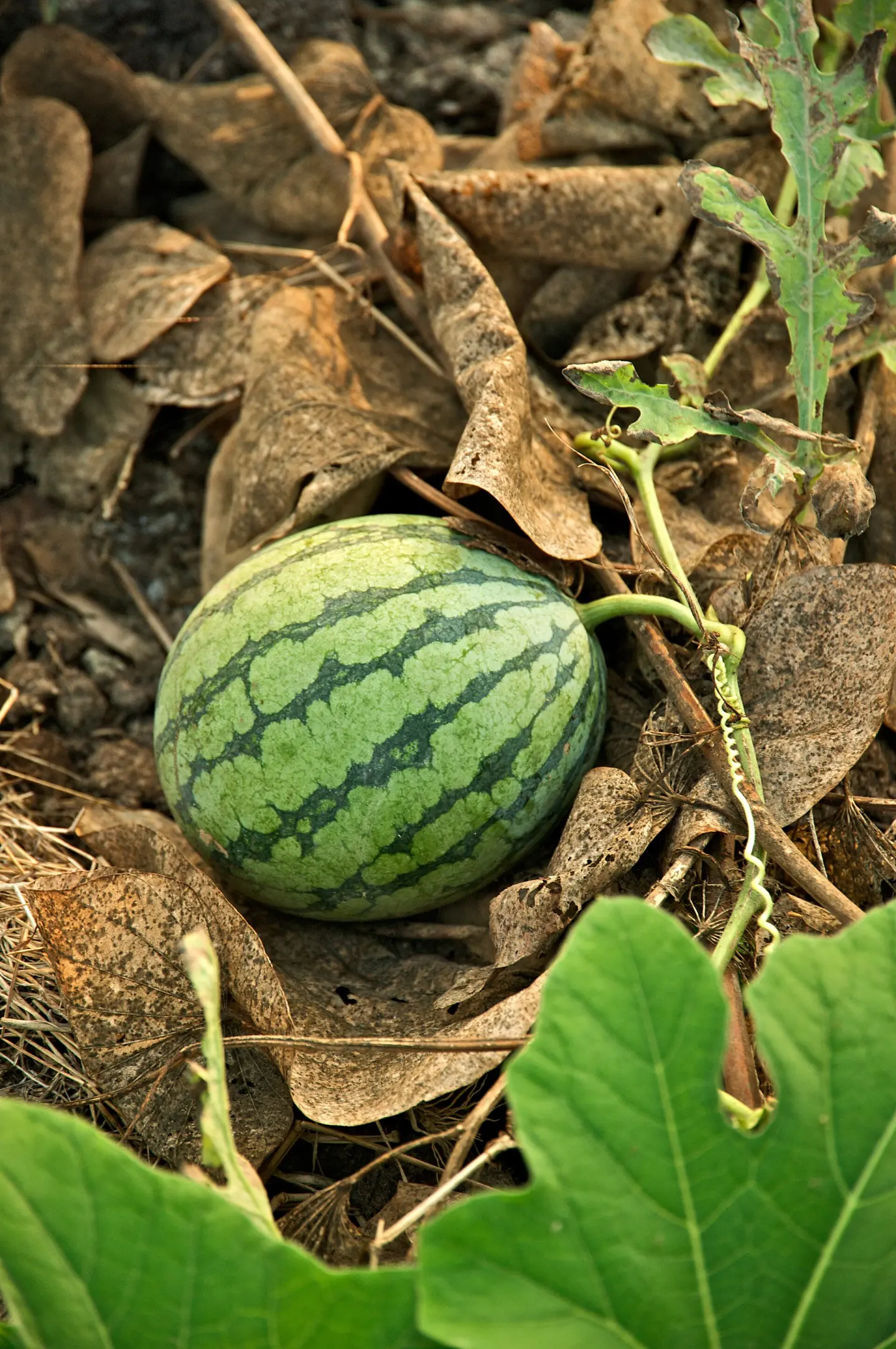
Photo: Fred Hsu · CC BY-SA 3.0, via Wikimedia Commons
Essential Care Requirements
Light
Full sun
Watering
Moderate
Water deeply while the vines grow and fruit swells. Reduce watering in the last week or two before harvest for sweeter fruit.
Soil
Sandy, rich, well-drained soil; pH 6.0–7.0.
Temperature and humidity
20–40 °C · Low humidity
Feeding
Feed every two weeks with compost tea, switching to a potassium-rich feed once fruit sets.
Pruning and propagation
Propagate by seed
Allow two or three fruits per vine and pinch out later ones for bigger, sweeter melons.
The flesh is safe for people and, without the rind and seeds, for dogs.
Top Cultivation Tips
Sow in February–March for a summer crop.
Ripe fruit has a yellow ground spot and a dry tendril by the stalk.
Rest fruit on straw to prevent rot.
Hand-pollinate female flowers in the morning.
Common problems
Cucumber beetle
Yellow-and-black striped or spotted beetles that chew cucurbit seedlings and spread bacterial wilt, a major pest in North America.
How to treat it →DiseaseDowny mildew
A water-mould disease that causes yellow patches on top of leaves and grey-purple fuzz underneath, spreading fast in cool, wet weather.
How to treat it →PestFruit flies
Flies that lay eggs inside ripening fruit; the maggots rot the fruit from within.
How to treat it →DiseasePowdery mildew
A fungal disease that coats leaves, buds and young shoots with a white, flour-like dust, weakening the plant and spoiling flowers and fruit.
How to treat it →PestRaccoons
Nocturnal, clever mammals that raid sweetcorn, melons, grapes and fruit at night and dig lawns for grubs.
How to treat it →PestRed pumpkin beetle
Bright orange beetles that chew holes in the leaves and flowers of gourds, pumpkins and cucumbers, especially young plants.
How to treat it →