Wallflower
Erysimum cheiri
Wallflowers bring early colour and a rich, sweet scent to spring beds, borders and pots, with velvety flowers in warm reds, oranges, yellows and purples. They are treated as biennials, planted in autumn to flower from March to May.
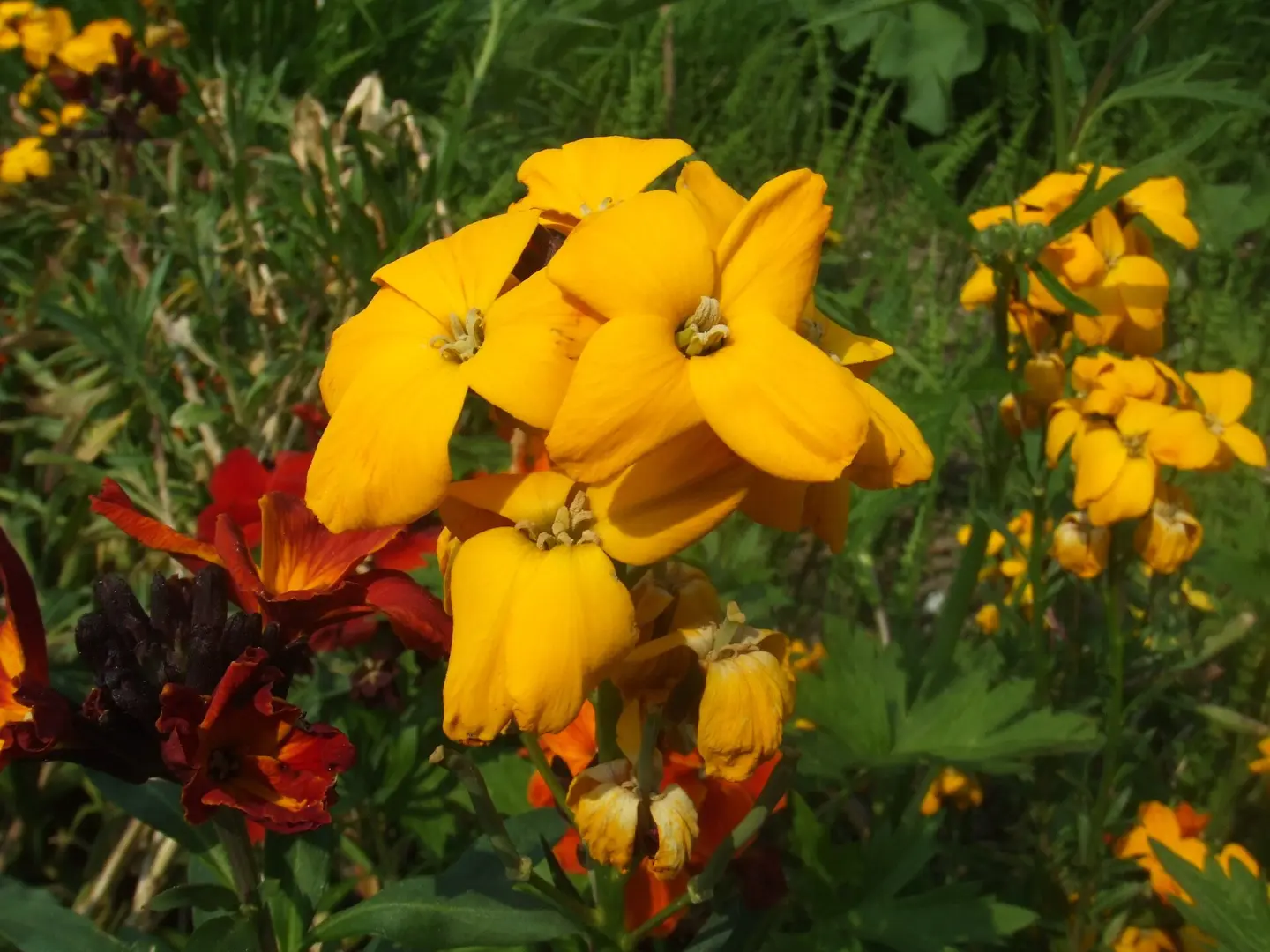
Photo: Hans Bernhard · Public domain, via Wikimedia Commons
Essential Care Requirements
Light
Full sun
Watering
Low
Water until established, then rarely. They tolerate dry spells and grow well in rocky walls and gravel.
Soil
Well-drained, light to chalky soil, neutral to alkaline; pH 6.5 to 8.0.
Temperature and humidity
-10–30 °C · Low humidity
Feeding
No feeding needed in most soils. Over-rich soil gives leggy plants.
Pruning and propagation
Propagate by seed, stem cuttings
Pinch young plants once for bushiness. Remove old plants after flowering, or cut back lightly if perennial types.
Seeds and plants may cause stomach upset if eaten. Wash hands after handling.
Top Cultivation Tips
Sow seed in early summer and plant out in autumn, spacing plants 25 to 30 cm apart.
Plant firmly, as wallflowers hate loose soil around the roots.
Leave them away from cabbage-family crops, as they share clubroot.
Perennial types like Bowles Mauve root easily from cuttings.
Common problems
Aphids
Small, soft-bodied insects that cluster on new shoots and buds, sucking sap and leaving sticky honeydew behind.
How to treat it →DiseaseClubroot
A soil-borne disease of cabbage-family plants that causes swollen, distorted roots, wilting and stunted growth.
How to treat it →DiseaseDowny mildew
A water-mould disease that causes yellow patches on top of leaves and grey-purple fuzz underneath, spreading fast in cool, wet weather.
How to treat it →PestFlea beetles
Tiny, shiny jumping beetles that pepper the leaves of brassicas, radishes and aubergines with small holes.
How to treat it →