Taro
Colocasia esculenta
Taro is a moisture-loving plant with large, heart-shaped leaves, grown for its starchy corms and edible leaves and stems. It grows readily in damp corners, large tubs and beside ponds.
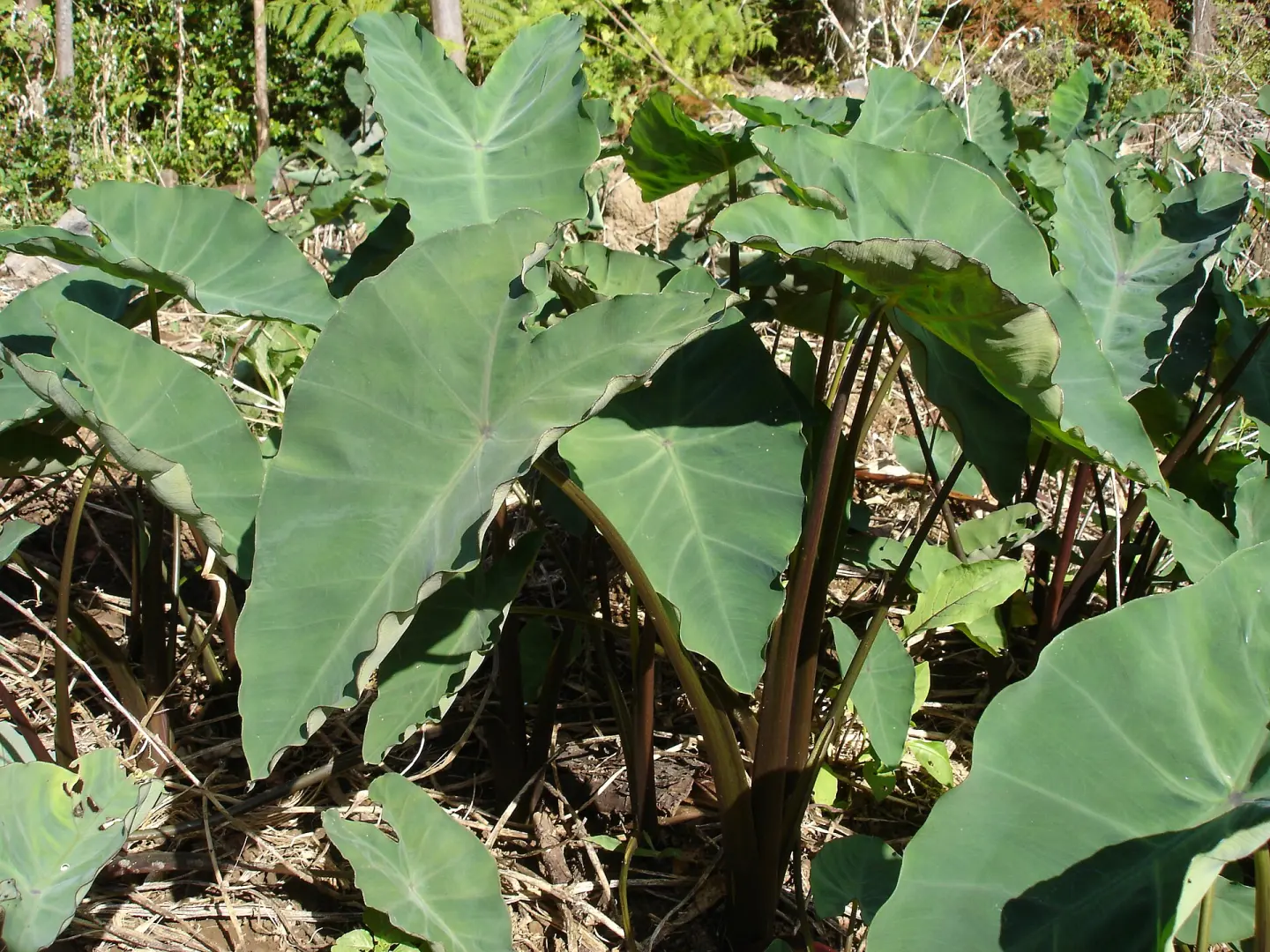
Photo: Thierry Caro · CC BY-SA 2.5, via Wikimedia Commons
Essential Care Requirements
Light
Partial sun, Full sun
Watering
High
Keep the soil constantly moist; taro tolerates wet soil better than most vegetables.
Soil
Rich, moisture-retentive soil with plenty of organic matter; pH 5.5–7.0.
Temperature and humidity
18–38 °C · High humidity
Feeding
Feed monthly with compost or well-rotted manure.
Pruning and propagation
Propagate by division
Remove old yellow leaves. Harvest a few leaves at a time without stripping the plant.
All parts contain calcium oxalate crystals and must be cooked thoroughly before eating; raw taro irritates the mouth and throat. It is toxic to cats and dogs.
Top Cultivation Tips
Plant small corms in spring, 5 cm deep.
Wear gloves when peeling raw corms.
Add tamarind or lemon when cooking leaves to reduce itchiness.
Keep cormels for replanting.
Common problems
Aphids
Small, soft-bodied insects that cluster on new shoots and buds, sucking sap and leaving sticky honeydew behind.
How to treat it →DiseaseLeaf spot
Fungal or bacterial infections that cause brown, black or purple spots on leaves, often with a yellow halo, leading to early leaf drop.
How to treat it →DiseaseRoot rot
Roots decay in waterlogged soil, so the plant wilts and yellows even though the soil is wet.
How to treat it →