Swiss Chard
Beta vulgaris subsp. vulgaris (Cicla group)
Swiss chard is a leafy beet with glossy leaves and colourful stems in red, yellow, pink or white. It tolerates both heat and cold better than spinach and gives months of cut-and-come-again harvests.
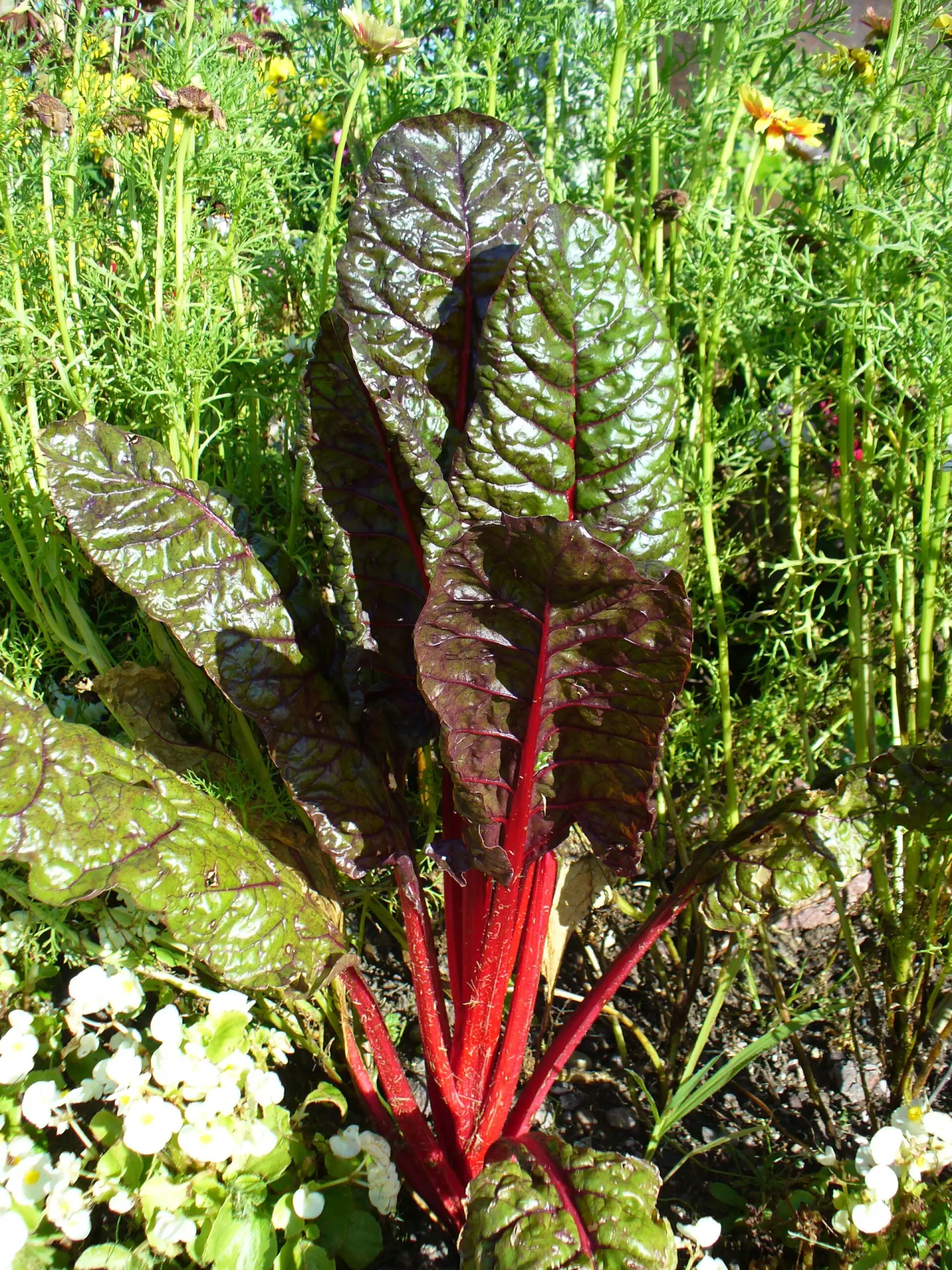
Photo: Neelix at English Wikipedia · Public domain, via Wikimedia Commons
Essential Care Requirements
Light
Full sun, Partial sun
Watering
Moderate
Keep the soil evenly moist for tender leaves.
Soil
Rich, well-drained soil with compost; pH 6.0–7.5.
Temperature and humidity
5–30 °C · Moderate humidity
Feeding
Feed every three weeks with a nitrogen-rich organic feed.
Pruning and propagation
Propagate by seed
Harvest the outer leaves at the base, leaving the centre to grow.
Chard is safe to eat. It contains oxalates, so people prone to kidney stones should eat it in moderation.
Top Cultivation Tips
Thin seedling clusters to one plant each.
Colourful varieties look good in flower borders too.
Cook stems a little longer than leaves.
Remove flower stalks to extend the harvest.
Common problems
Aphids
Small, soft-bodied insects that cluster on new shoots and buds, sucking sap and leaving sticky honeydew behind.
How to treat it →DiseaseCercospora leaf spot
A fungal leaf disease that causes round grey spots with reddish-purple borders on beetroot, chard, spinach and many ornamentals.
How to treat it →DiseaseCurly top virus
A leafhopper-spread virus that makes leaves roll, thicken and turn yellow, and stunts beet, tomato, pepper and bean plants.
How to treat it →PestLeaf miners
Larvae of small flies and moths that tunnel inside leaves, leaving pale, winding trails.
How to treat it →DiseaseLeaf spot
Fungal or bacterial infections that cause brown, black or purple spots on leaves, often with a yellow halo, leading to early leaf drop.
How to treat it →