Sweet Chestnut
Castanea sativa
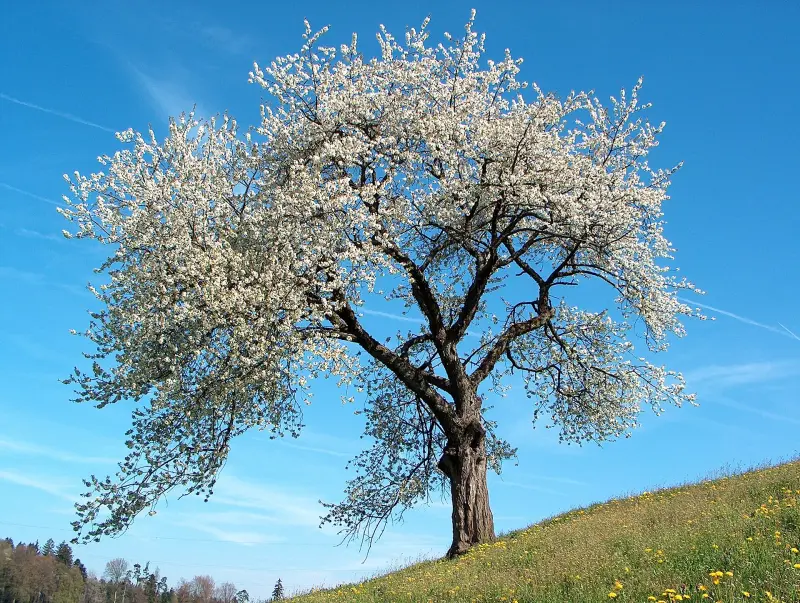
Sweet chestnut is a large, long-lived deciduous tree producing glossy brown nuts in spiny cases in autumn. It needs room, sun and acid to neutral soil, and the nuts are roasted or ground into flour.
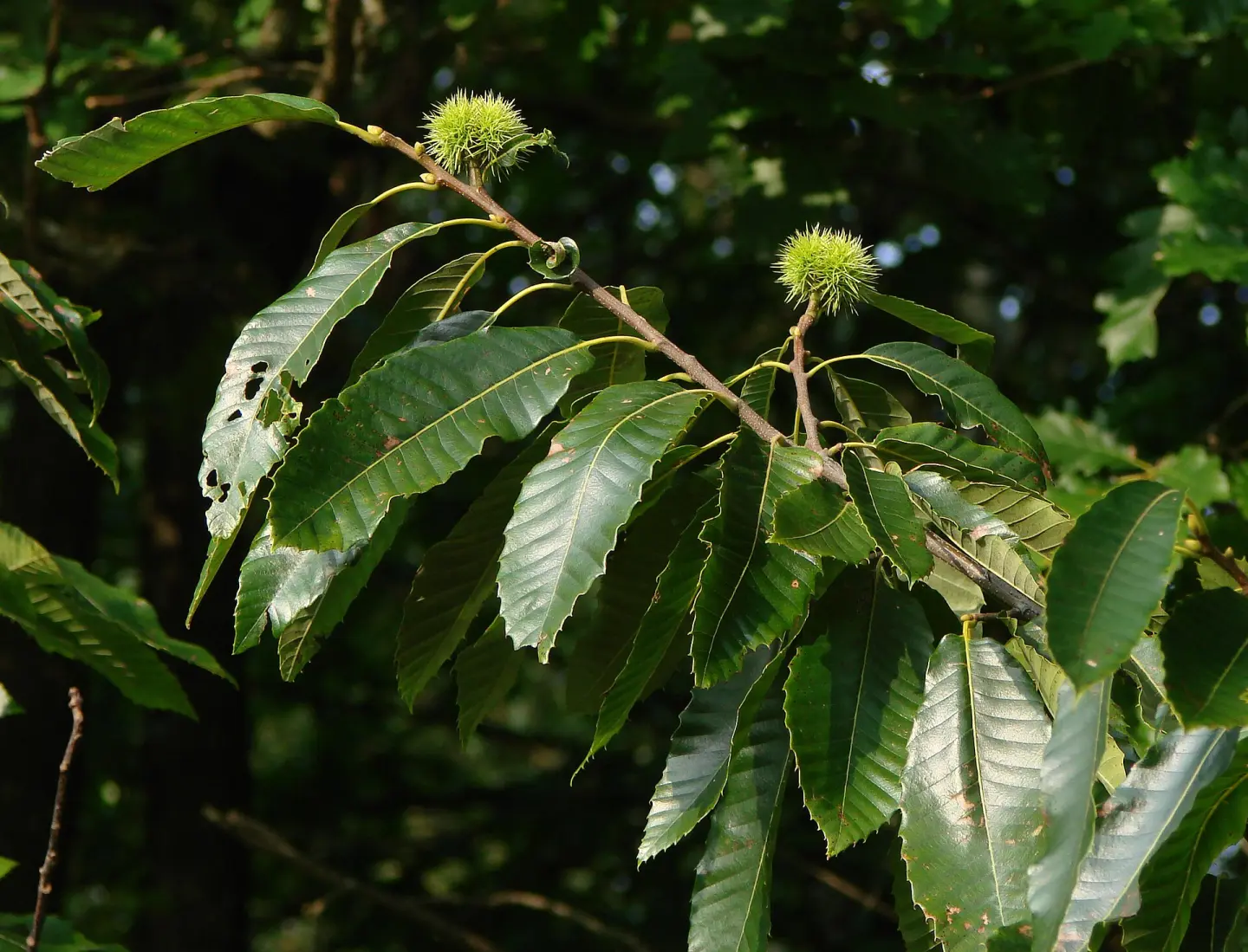
Photo: Vassil · Public domain, via Wikimedia Commons
Essential Care Requirements
Light
Full sun
Watering
Moderate
Water young trees well for the first few years. Established trees tolerate dry spells.
Soil
Deep, well-drained, acidic to neutral soil, not chalky; pH 5.0 to 6.5.
Temperature and humidity
-25–32 °C · Moderate humidity
Feeding
Mulch with compost around young trees in spring.
Pruning and propagation
Propagate by seed, grafting
Prune young trees to form a clear trunk. Mature trees need little pruning.
Nuts are edible when cooked. Do not eat horse chestnuts, which are poisonous.
Top Cultivation Tips
Choose a named variety for larger nuts.
Plant two trees for better pollination.
Collect nuts as the cases fall and split.
Avoid planting where there is chalk.
Common problems
Caterpillars
The larvae of moths and butterflies, which chew holes in leaves, flowers and fruit and can strip a plant in days.
How to treat it →DiseaseHoney fungus
A destructive fungus that attacks and kills the roots of trees and shrubs, spreading underground by black, bootlace-like strands.
How to treat it →DiseaseLeaf spot
Fungal or bacterial infections that cause brown, black or purple spots on leaves, often with a yellow halo, leading to early leaf drop.
How to treat it →DiseaseStem canker
Sunken, dead patches of bark on stems and branches caused by fungi or bacteria, which can girdle and kill the shoot above them.
How to treat it →