Sugarcane
Saccharum officinarum
Sugarcane is a tall tropical grass with thick, juicy stems that are chewed fresh, pressed for juice or used for jaggery. In a warm garden a small clump gives a steady supply of canes, and it also makes a fast, dense windbreak.
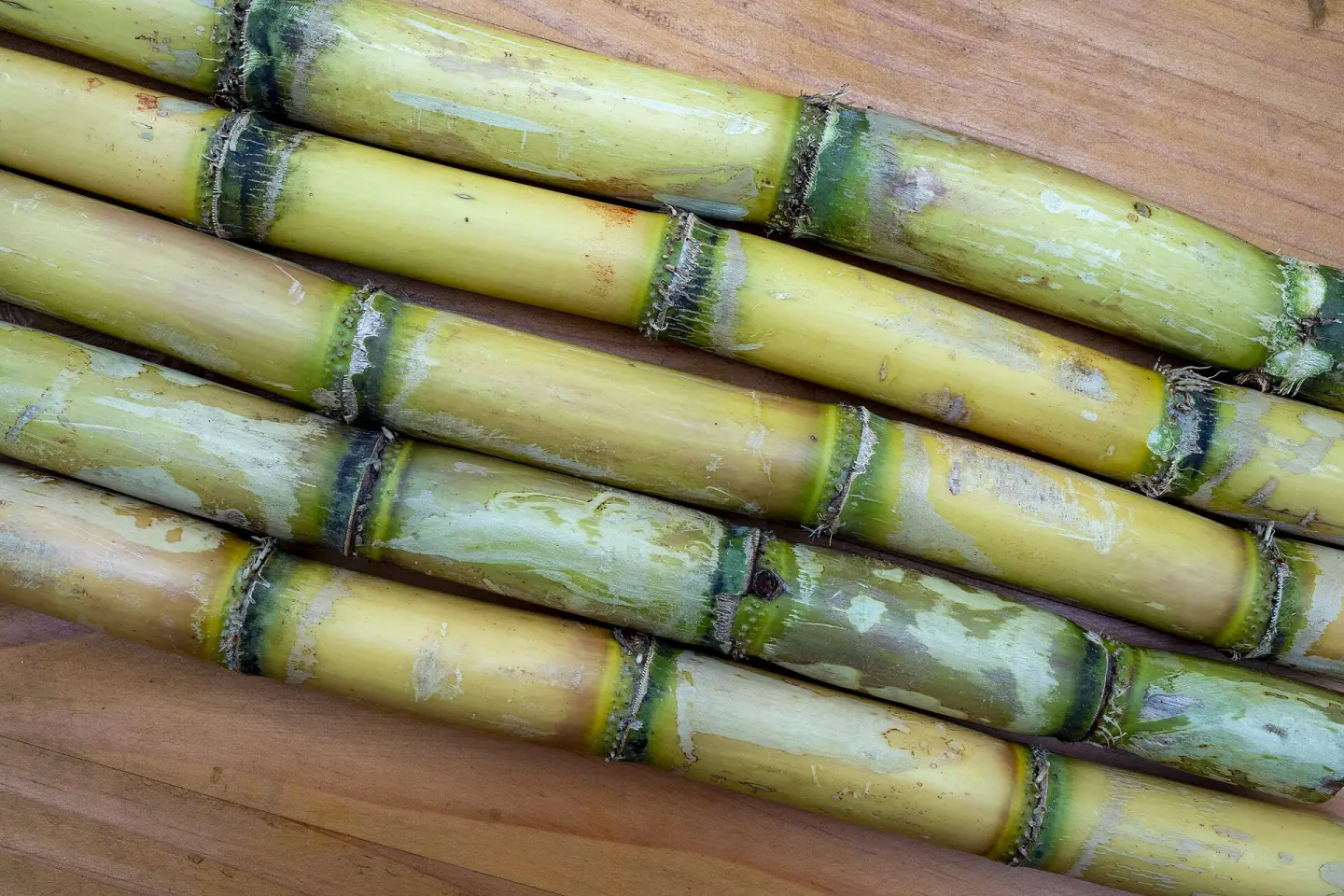
Photo: Jubair Bin Iqbal · CC BY-SA 4.0, via Wikimedia Commons
Essential Care Requirements
Light
Full sun
Watering
High
Water deeply once or twice a week in dry weather and keep the soil evenly moist while the canes are growing. Reduce watering in the last month before harvest to raise sweetness.
Soil
Deep, fertile, well-drained loam rich in compost; pH 6.0 to 7.5.
Temperature and humidity
15–40 °C · Moderate humidity
Feeding
Feed with compost or well-rotted manure at planting and again at two and four months. A nitrogen-rich feed in the first half of the season builds strong canes.
Pruning and propagation
Propagate by stem cuttings
Cut canes at ground level when mature, leaving the stubble to regrow. Remove dry lower leaves and thin crowded clumps every year.
Sugarcane is safe to eat. Sharp leaf edges can cut skin, so wear gloves when handling.
Top Cultivation Tips
Plant pieces of cane with two or three healthy buds, laid flat in a shallow trench.
Earth up the base once or twice to support tall canes against wind.
Mulch heavily with dry leaves to hold moisture and suppress weeds.
Cut canes from the bottom, as the lower sections are the sweetest.
Common problems
Rats and mice
Rodents that gnaw stored produce, seeds and bulbs, raid compost heaps and chew through stems, irrigation pipes and wiring.
How to treat it →PestScale insects
Immobile, shell-covered insects that cling to stems and leaves, draining sap and weakening trees and houseplants.
How to treat it →PestStem borers
Caterpillars and grubs that tunnel inside stems and shoots, causing wilting, dead growing tips and broken stems.
How to treat it →PestTermites
Soil-dwelling social insects that eat roots and the base of stems, killing seedlings and weakening trees.
How to treat it →