Sago Palm
Cycas revoluta
A slow-growing, ancient plant with a stout trunk and a crown of stiff, glossy, feather-like fronds. It looks like a palm but is a cycad, and it makes a sculptural focal point in pots, rockeries and tropical gardens.
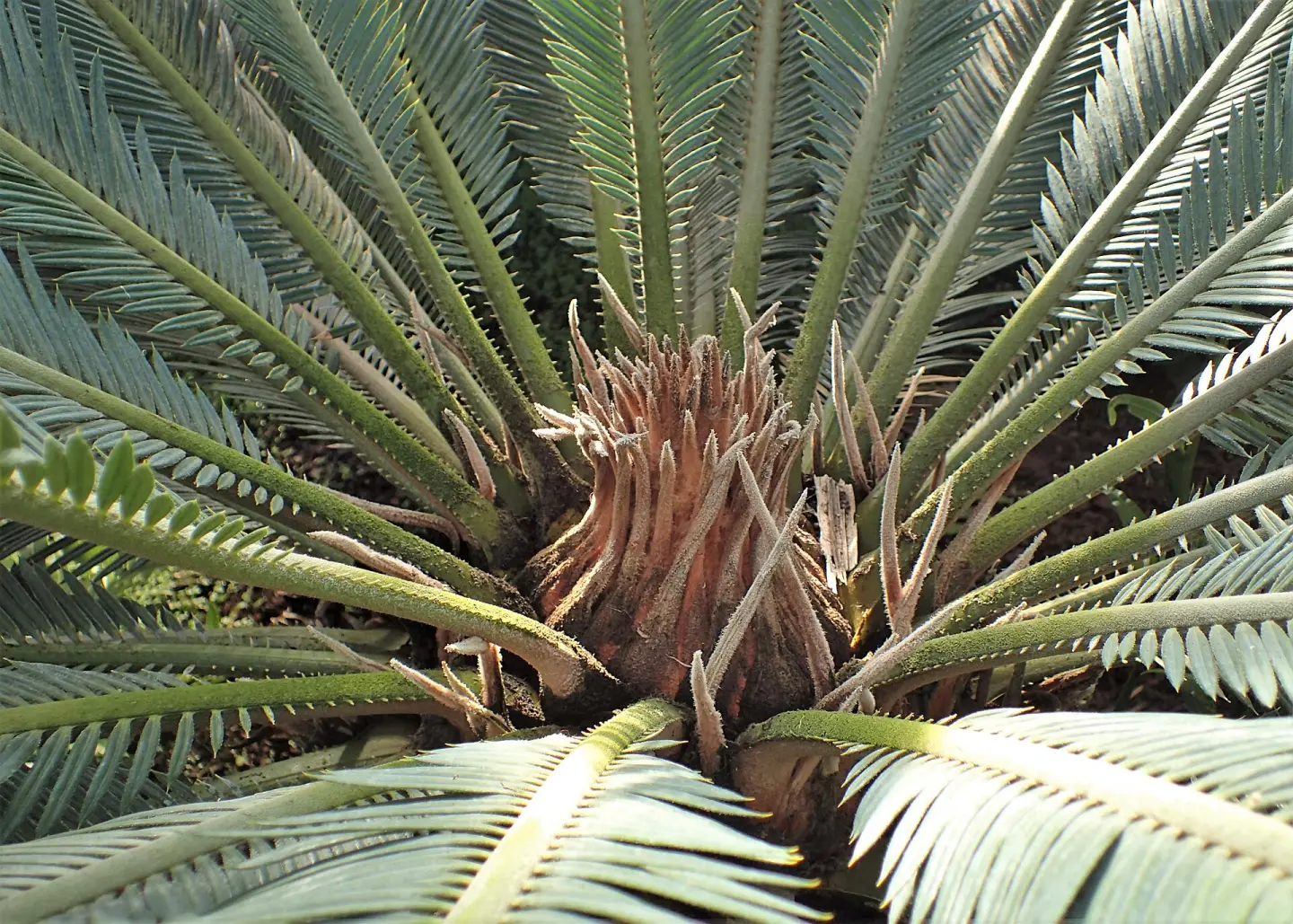
Photo: Krzysztof Ziarnek, Kenraiz · CC BY-SA 4.0, via Wikimedia Commons
Essential Care Requirements
Light
Full sun, Partial sun, Bright indirect light
Watering
Low
Water only when the top 5 cm of soil is dry. It tolerates drought but rots in wet soil.
Soil
Fast-draining, gritty mix with sand and compost; pH 5.5 to 7.0.
Temperature and humidity
-5–38 °C · Moderate humidity
Feeding
Feed lightly in spring and summer with a slow-release palm fertilizer.
Pruning and propagation
Propagate by offsets, seed
Remove only fully brown or yellow fronds at the base. Wear gloves, as the leaf bases are sharp.
Every part, especially the seeds, is highly poisonous to pets and people. Keep out of reach of dogs, cats and children and wash hands after handling.
Top Cultivation Tips
New fronds appear all at once in a flush, usually once a year.
Pup offsets from the base can be separated and replanted.
Do not plant where pets can chew the plant.
Yellowing new fronds usually mean a lack of manganese; feed with a palm fertilizer.
Common problems
Manganese deficiency
A trace-element shortage that causes yellow patches between green veins on young leaves, often on high-pH, peaty or heavily limed soils.
How to treat it →PestMealybugs
White, cottony insects that hide in leaf joints and under leaves, weakening plants and spreading easily to neighbours.
How to treat it →DiseaseRoot rot
Roots decay in waterlogged soil, so the plant wilts and yellows even though the soil is wet.
How to treat it →PestScale insects
Immobile, shell-covered insects that cling to stems and leaves, draining sap and weakening trees and houseplants.
How to treat it →