Potato
Solanum tuberosum
Potatoes are easy to grow in the cool season from sprouted seed tubers, and do well in grow bags and deep containers as well as beds. Home-grown new potatoes, dug straight from the soil, have a flavour shop-bought ones cannot match.
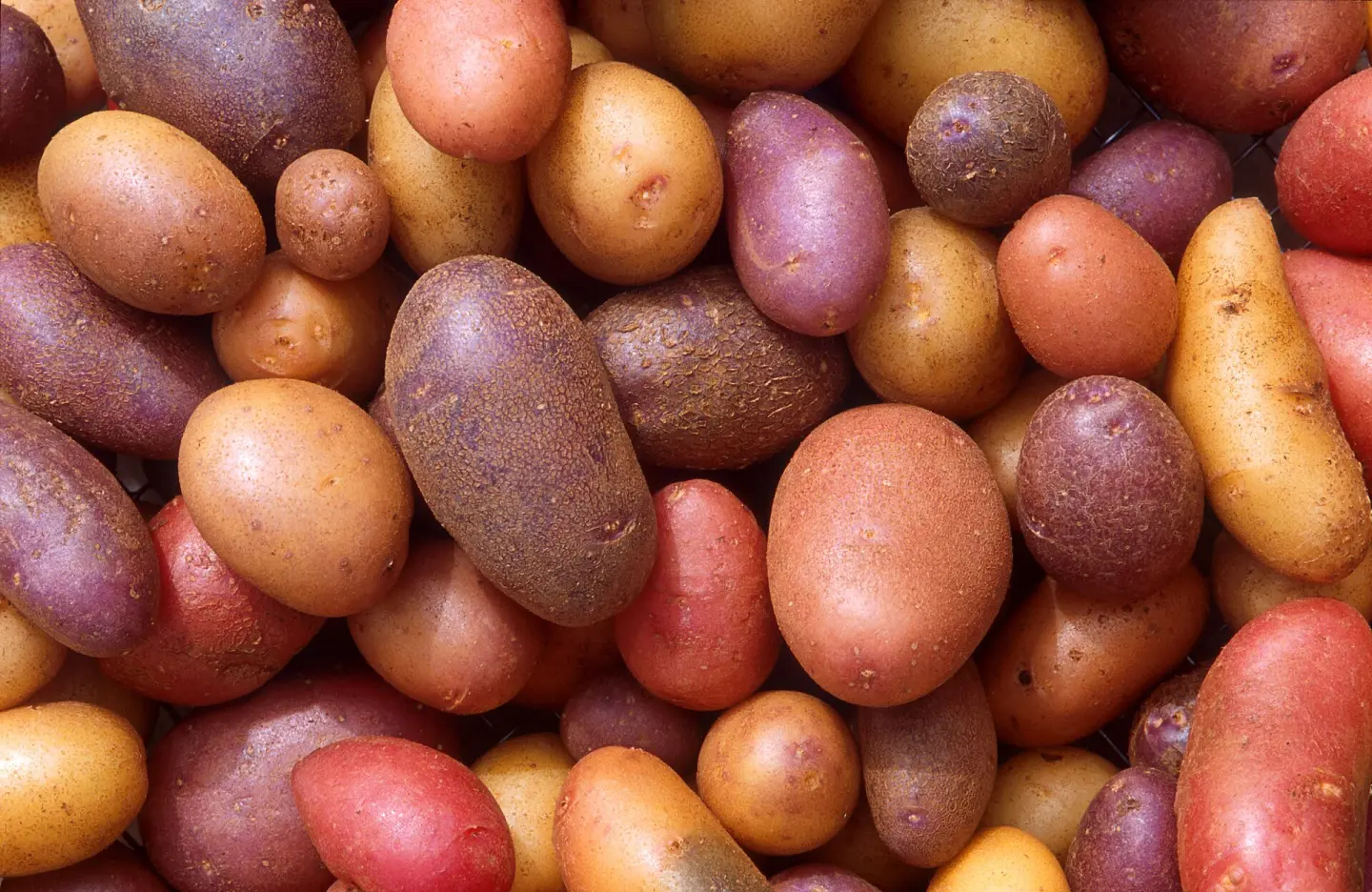
Photo: Scott Bauer, USDA ARS · Public domain, via Wikimedia Commons
Essential Care Requirements
Light
Full sun
Watering
Moderate
Water regularly once shoots appear, especially when plants flower and tubers are forming. Avoid waterlogging, which rots tubers.
Soil
Loose, fertile, well-drained soil with compost; pH 5.0–6.5.
Temperature and humidity
7–28 °C · Moderate humidity
Feeding
Mix compost into the soil at planting and top-dress with compost when earthing up. A potassium-rich feed improves tuber size.
Pruning and propagation
Propagate by division
No pruning needed. Earth up soil or compost around the stems every few weeks so tubers stay covered.
The leaves, stems, berries and green or sprouted tubers contain solanine and are toxic to people and pets. Cooked, unblemished tubers are safe.
Top Cultivation Tips
Use certified seed potatoes rather than shop-bought ones.
Chit (pre-sprout) tubers in light for two weeks before planting.
Keep tubers covered; green potatoes must not be eaten.
Store harvested potatoes in a dark, cool, airy place.
Common problems
Aphids
Small, soft-bodied insects that cluster on new shoots and buds, sucking sap and leaving sticky honeydew behind.
How to treat it →DiseaseBacterial soft rot
A bacterial rot that turns fleshy roots, bulbs, stems and leaves into wet, slimy, foul-smelling mush.
How to treat it →DiseaseBlackleg
A disease that blackens and rots the base of potato stems from soil-borne bacteria, and causes sunken cankers and leaf spots on cabbage-family plants.
How to treat it →PestBlister beetles
Long, narrow, soft-bodied beetles that swarm over leaves and flowers, and release a chemical that causes painful blisters on skin.
How to treat it →PestColorado potato beetle
Yellow-and-black striped beetles and their reddish larvae that strip the leaves of potatoes, aubergines and tomatoes.
How to treat it →DiseaseCommon scab
A soil bacterium that causes rough, corky, scabby patches on potatoes and other root crops. It spoils the look but not the eating quality.
How to treat it →PestCutworms
Fat, greyish caterpillars that hide in the soil by day and chew through young seedlings at ground level at night.
How to treat it →DiseaseEarly blight
A fungal disease of tomatoes and potatoes that causes brown spots with target-like rings on the lower leaves.
How to treat it →PestEpilachna beetles
Ladybird-like leaf-eating beetles and their spiny yellow larvae that scrape leaves into lace on beans, aubergine, potato and cucurbits.
How to treat it →PestJassids
Small, wedge-shaped green insects that run sideways and suck sap from leaf undersides, causing curled, yellow-edged and scorched leaves.
How to treat it →DiseaseLate blight
A fast-spreading disease of tomatoes and potatoes that causes dark, greasy patches on leaves and fruit and can kill plants within days.
How to treat it →DiseaseMagnesium deficiency
Older leaves turn yellow between the veins while the veins stay green, often with reddish or purple tints.
How to treat it →DiseaseManganese deficiency
A trace-element shortage that causes yellow patches between green veins on young leaves, often on high-pH, peaty or heavily limed soils.
How to treat it →PestMole crickets
Stout burrowing insects with large digging front legs that tunnel through soil, cut roots and uproot seedlings in warm regions.
How to treat it →PestPocket gophers
Burrowing rodents that eat roots, bulbs and tubers from below, leaving crescent-shaped soil mounds and plants that wilt or vanish.
How to treat it →DiseasePotassium deficiency
Older leaves develop yellow and then brown, scorched edges, and fruit is small and poorly coloured.
How to treat it →PestPotato cyst nematode
Microscopic soil worms that damage potato and tomato roots and persist in the soil for many years.
How to treat it →DiseaseRhizoctonia rot
A soil-borne fungus that rots seedling stems, roots and cuttings, and causes dark scabby patches on potatoes and roots.
How to treat it →PestTomato hornworm
Large green caterpillars with a horn on the tail that can strip tomato and pepper plants of leaves almost overnight.
How to treat it →PestTomato psyllid
A tiny jumping sap-sucker that causes yellow, purple-tinged, upward-curling leaves on tomatoes, peppers and potatoes and can spread a bacterial disease.
How to treat it →DiseaseVerticillium wilt
A soil-borne fungal disease that blocks the water-conducting tissue, causing leaves to yellow and wilt, often on one side of the plant.
How to treat it →PestVoles
Small rodents that gnaw bark at the base of young trees, eat bulbs and roots, and make runways through grass and mulch.
How to treat it →PestWireworms
Slender, hard, yellow-brown grubs that tunnel into potatoes, carrots and seedling roots in soil that was recently grass.
How to treat it →