Pampas Grass
Cortaderia selloana
Pampas grass forms huge, evergreen clumps of arching leaves with towering silvery-white plumes in late summer. It is dramatic in large gardens, but check local rules, as it is invasive in some regions, including parts of California and Hawaii.
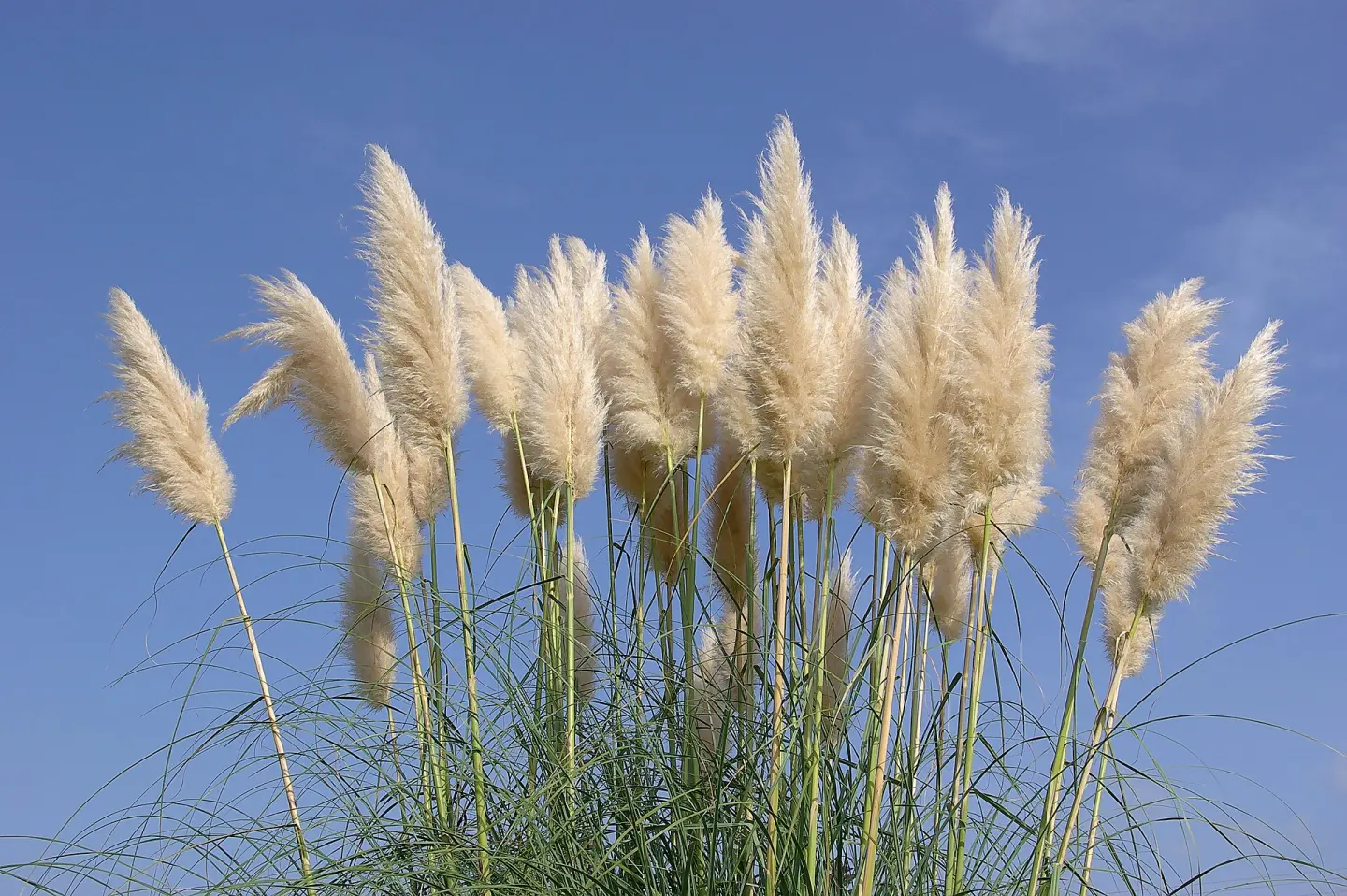
Photo: JLPC · CC BY-SA 3.0, via Wikimedia Commons
Essential Care Requirements
Light
Full sun
Watering
Low
Water young plants regularly. Established clumps are very drought tolerant.
Soil
Almost any well-drained soil; pH 5.5 to 8.0.
Temperature and humidity
-17–38 °C · Low humidity
Feeding
No feeding in most soils.
Pruning and propagation
Propagate by division, seed
Cut to the ground in early spring, or leave plumes for winter, and wear thick gloves, as the leaf edges are razor sharp.
Non-toxic, but leaf edges can cause deep cuts.
Top Cultivation Tips
Check whether it is classed as invasive where you live before planting.
Give plenty of room, as clumps grow very large.
Never burn the clump, which can be a fire risk.
Divide old clumps in spring with a sharp spade.
Common problems
Aphids
Small, soft-bodied insects that cluster on new shoots and buds, sucking sap and leaving sticky honeydew behind.
How to treat it →DiseaseRoot rot
Roots decay in waterlogged soil, so the plant wilts and yellows even though the soil is wet.
How to treat it →DiseaseRust
A fungal disease that forms orange, brown or yellow powdery pustules, mainly on leaf undersides.
How to treat it →PestScale insects
Immobile, shell-covered insects that cling to stems and leaves, draining sap and weakening trees and houseplants.
How to treat it →