Oleander
Nerium oleander
Oleander is a tough evergreen shrub with narrow leaves and clusters of pink, red, white or yellow flowers for much of the year. It is very drought and pollution tolerant, but every part of the plant is highly poisonous.
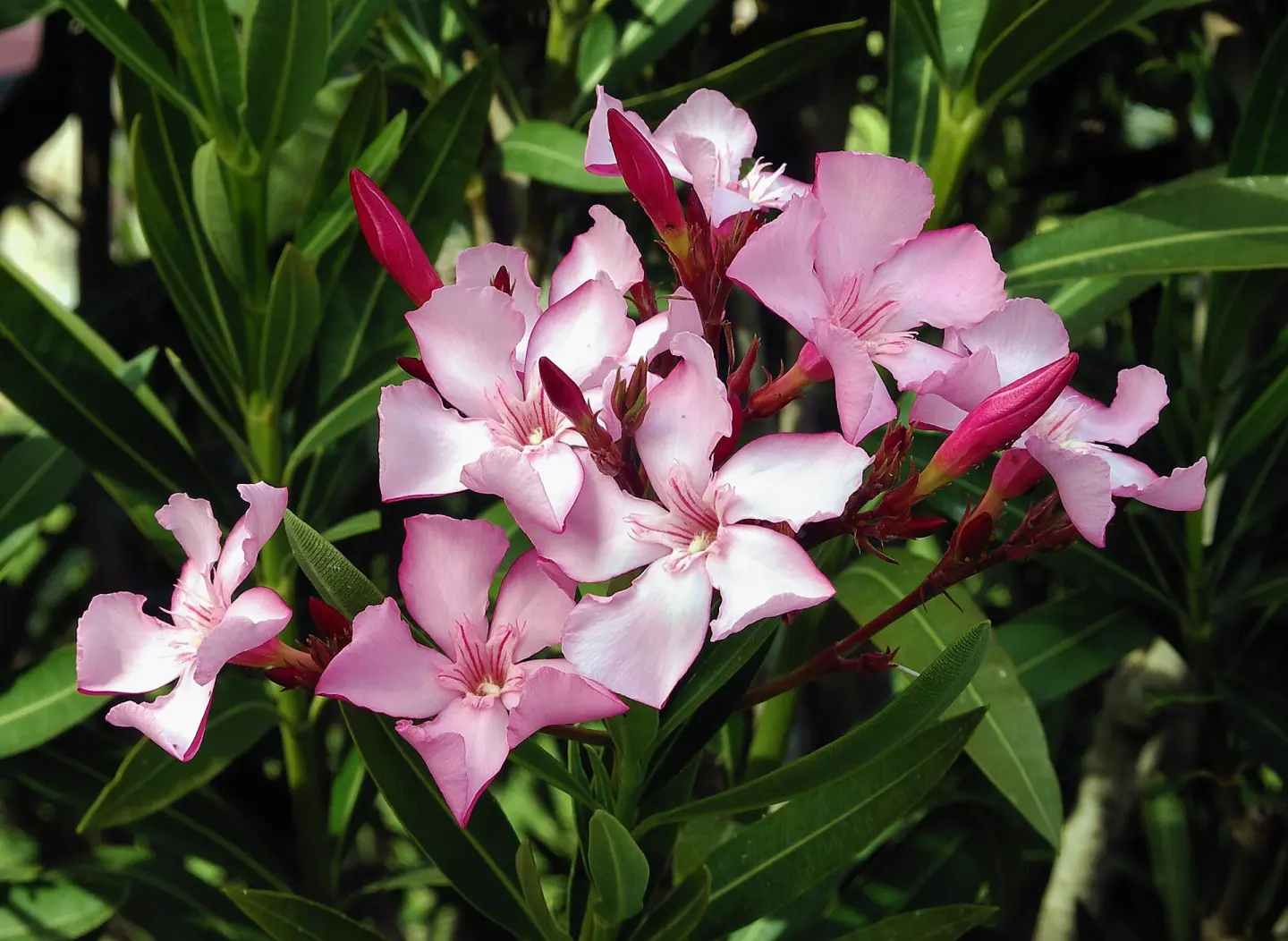
Photo: Alvesgaspar · CC BY 2.5, via Wikimedia Commons
Essential Care Requirements
Light
Full sun
Watering
Low
Water young plants regularly; established plants are very drought tolerant.
Soil
Any well-drained soil; tolerates poor, saline and alkaline soils.
Temperature and humidity
0–45 °C · Low humidity
Feeding
Light feeding once or twice a year.
Pruning and propagation
Propagate by stem cuttings, layering
Prune after flowering to shape, wearing gloves. Do not burn the prunings; the smoke is toxic.
All parts are highly toxic to people, pets and livestock, even in small amounts. Do not plant where children or animals might chew it.
Top Cultivation Tips
Wear gloves and wash hands after handling.
Excellent for road medians and dry boundaries.
Cuttings root easily in water.
Keep fallen leaves away from animal feed.
Common problems
Aphids
Small, soft-bodied insects that cluster on new shoots and buds, sucking sap and leaving sticky honeydew behind.
How to treat it →PestScale insects
Immobile, shell-covered insects that cling to stems and leaves, draining sap and weakening trees and houseplants.
How to treat it →DiseaseSooty mould
A black, powdery fungal coating that grows on the sticky honeydew left by sap-sucking insects, blocking light from leaves.
How to treat it →