Nasturtium
Tropaeolum majus
Nasturtiums are cheerful annuals with round leaves and bright orange, red and yellow flowers. Both leaves and flowers are edible with a peppery taste, and the plants are a popular trap crop that draws aphids away from vegetables.
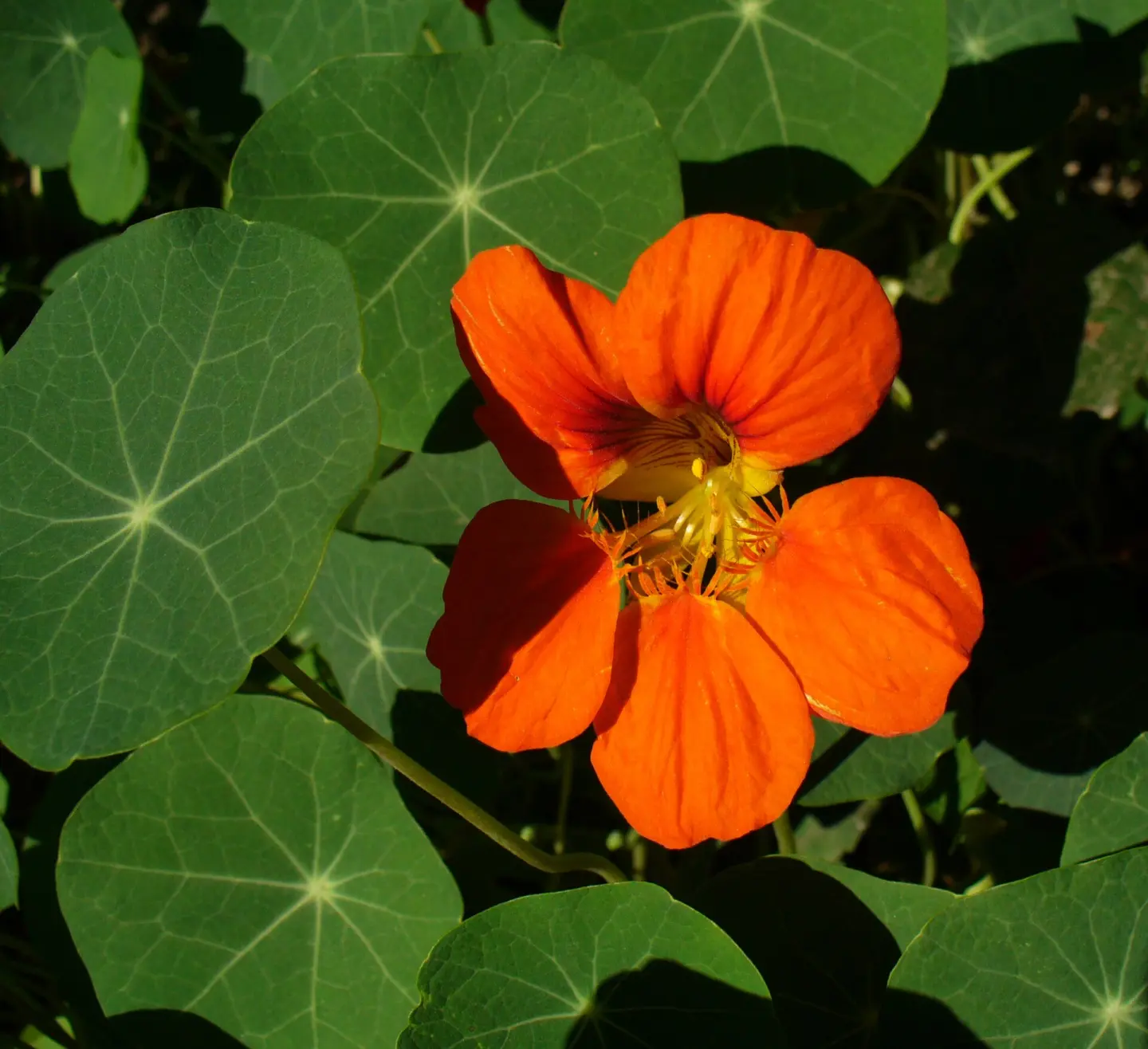
Photo: George Chernilevsky · Public domain, via Wikimedia Commons
Essential Care Requirements
Light
Full sun, Partial sun
Watering
Moderate
Water when the top of the soil is dry. Too much water and feeding give leaves but few flowers.
Soil
Poor to average, well-drained soil; pH 6.0–7.5.
Temperature and humidity
5–30 °C · Moderate humidity
Feeding
Do not feed; rich soil reduces flowering.
Pruning and propagation
Propagate by seed
Trim straggly stems and remove faded flowers.
Leaves, flowers and seed pods are edible and non-toxic to pets.
Top Cultivation Tips
Sow the large seeds directly in October–November.
Plant near vegetables as an aphid trap crop.
Use flowers to decorate salads.
Trailing types suit hanging baskets.
Common problems
Aphids
Small, soft-bodied insects that cluster on new shoots and buds, sucking sap and leaving sticky honeydew behind.
How to treat it →PestCabbage white caterpillars
Green or yellow-green caterpillars of white butterflies that chew large holes in cabbage-family leaves and foul the hearts with droppings.
How to treat it →PestCaterpillars
The larvae of moths and butterflies, which chew holes in leaves, flowers and fruit and can strip a plant in days.
How to treat it →PestLeaf miners
Larvae of small flies and moths that tunnel inside leaves, leaving pale, winding trails.
How to treat it →