Loquat
Eriobotrya japonica
Loquat is a handsome evergreen tree with large, leathery leaves, fragrant winter flowers and clusters of sweet-tart orange fruit in spring. It is adaptable, grows well in north India and the hills, and makes an attractive garden tree.
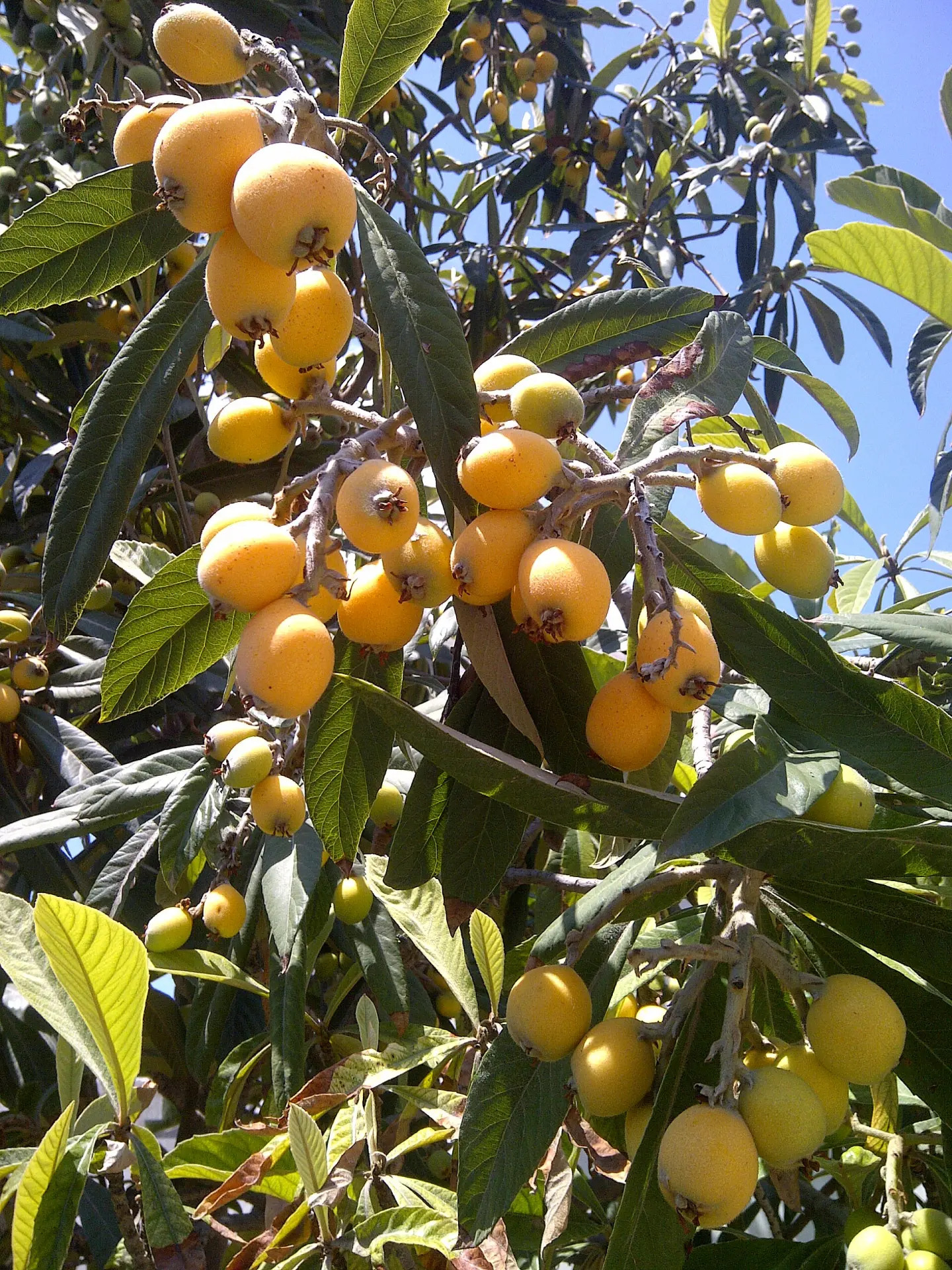
Photo: Aftabbanoori · CC BY-SA 3.0, via Wikimedia Commons
Essential Care Requirements
Light
Full sun, Partial sun
Watering
Moderate
Water regularly while fruit develops; reduce in winter and the monsoon.
Soil
Well-drained loam; pH 6.0–7.5.
Temperature and humidity
-3–38 °C · Moderate humidity
Feeding
Feed with compost and a balanced fertilizer after harvest and before flowering.
Pruning and propagation
Propagate by grafting, air layering, seed
Prune after harvest to keep the tree compact and thin crowded branches.
The ripe flesh is safe. The seeds and leaves contain compounds that release cyanide and should not be eaten by people or pets.
Top Cultivation Tips
Grafted trees fruit in 2–3 years.
Thin fruit clusters for bigger loquats.
Pick fruit when fully coloured and slightly soft.
Protect ripening fruit from birds.
Common problems
Apple scab
A fungal disease that causes olive-brown blotches on leaves and corky, cracked scabs on apples and pears.
How to treat it →DiseaseFire blight
A bacterial disease of apples, pears and related plants that makes blossoms, shoots and branches look scorched by fire.
How to treat it →PestFruit flies
Flies that lay eggs inside ripening fruit; the maggots rot the fruit from within.
How to treat it →DiseaseLeaf spot
Fungal or bacterial infections that cause brown, black or purple spots on leaves, often with a yellow halo, leading to early leaf drop.
How to treat it →PestScale insects
Immobile, shell-covered insects that cling to stems and leaves, draining sap and weakening trees and houseplants.
How to treat it →