Loganberry
Rubus x loganobaccus
The loganberry is a hybrid between a raspberry and blackberry with large, tart, dark red fruit in July and August that is ideal for jams and desserts. A thornless form is also available, and plants are easy to train against a fence.
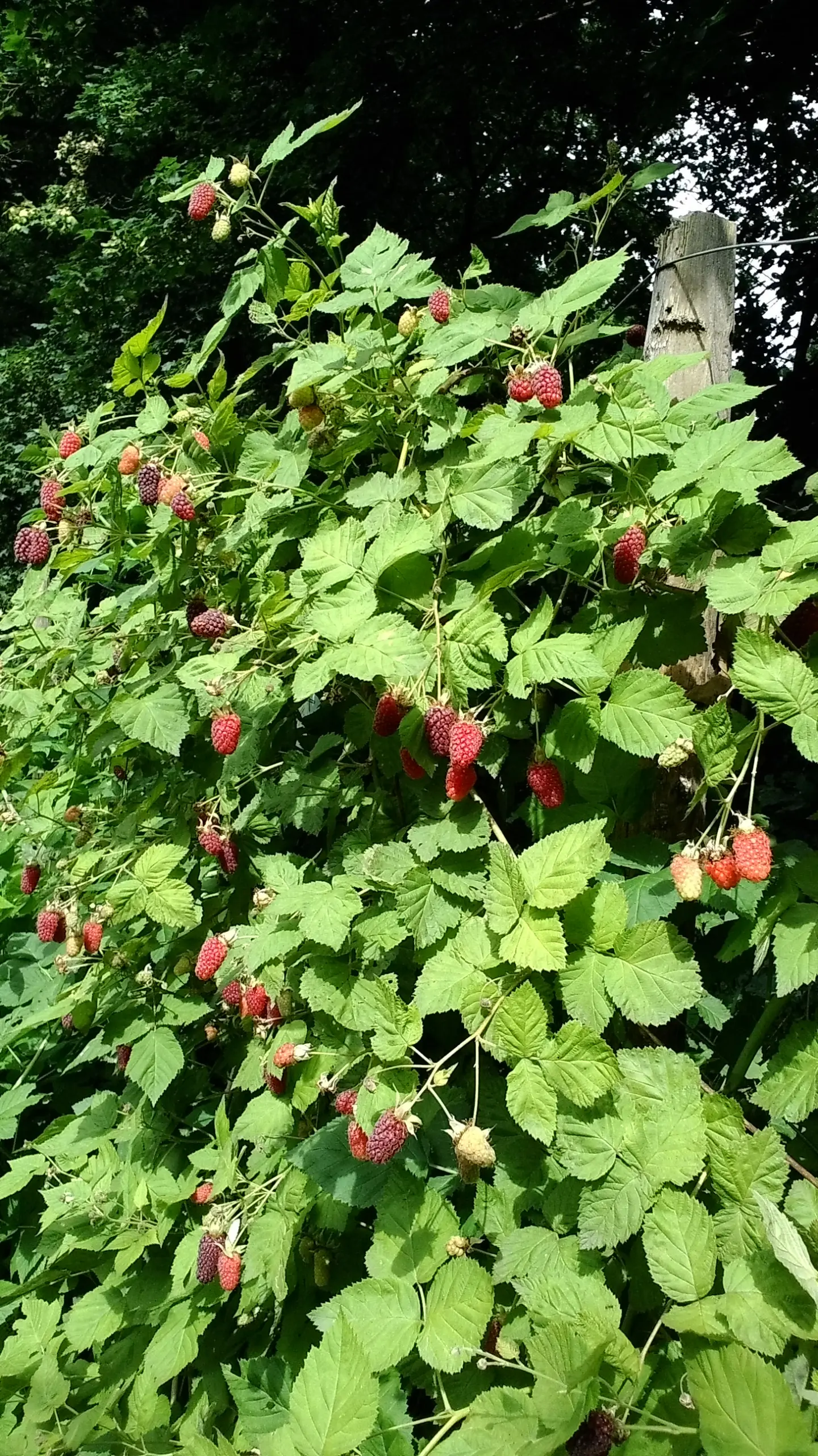
Photo: Baswanschers · CC BY-SA 4.0, via Wikimedia Commons
Essential Care Requirements
Light
Full sun, Partial sun
Watering
Moderate
Water in dry spells and during fruit development. Mulch to keep roots cool.
Soil
Rich, well-drained soil with plenty of organic matter; pH 6.0 to 7.0.
Temperature and humidity
-20–30 °C · Moderate humidity
Feeding
Feed with a general fertilizer in spring and mulch with compost.
Pruning and propagation
Propagate by layering
Cut fruited canes to the ground after harvest and tie in the new canes.
Non-toxic.
Top Cultivation Tips
Choose the thornless variety for easier picking.
Train canes in a fan on wires.
Pick regularly so that fruit does not spoil.
Allow fruit to turn dark purple red before picking.
Common problems
Aphids
Small, soft-bodied insects that cluster on new shoots and buds, sucking sap and leaving sticky honeydew behind.
How to treat it →DiseaseGrey mould
A fungal rot that covers flowers, fruit and soft stems with fuzzy grey mould in cool, damp conditions.
How to treat it →PestRaspberry beetle
Small beetle whose creamy white grubs feed inside raspberries, blackberries and loganberries, leaving fruit shrivelled and unusable.
How to treat it →DiseaseRaspberry cane blight
A fungal disease that kills raspberry canes, which become brittle and break at ground level in summer.
How to treat it →