Kale
Brassica oleracea var. sabellica
Kale is a hardy leafy green with curly or flat, deeply textured leaves. It grows well in containers in the cool season and can be harvested leaf by leaf for months.
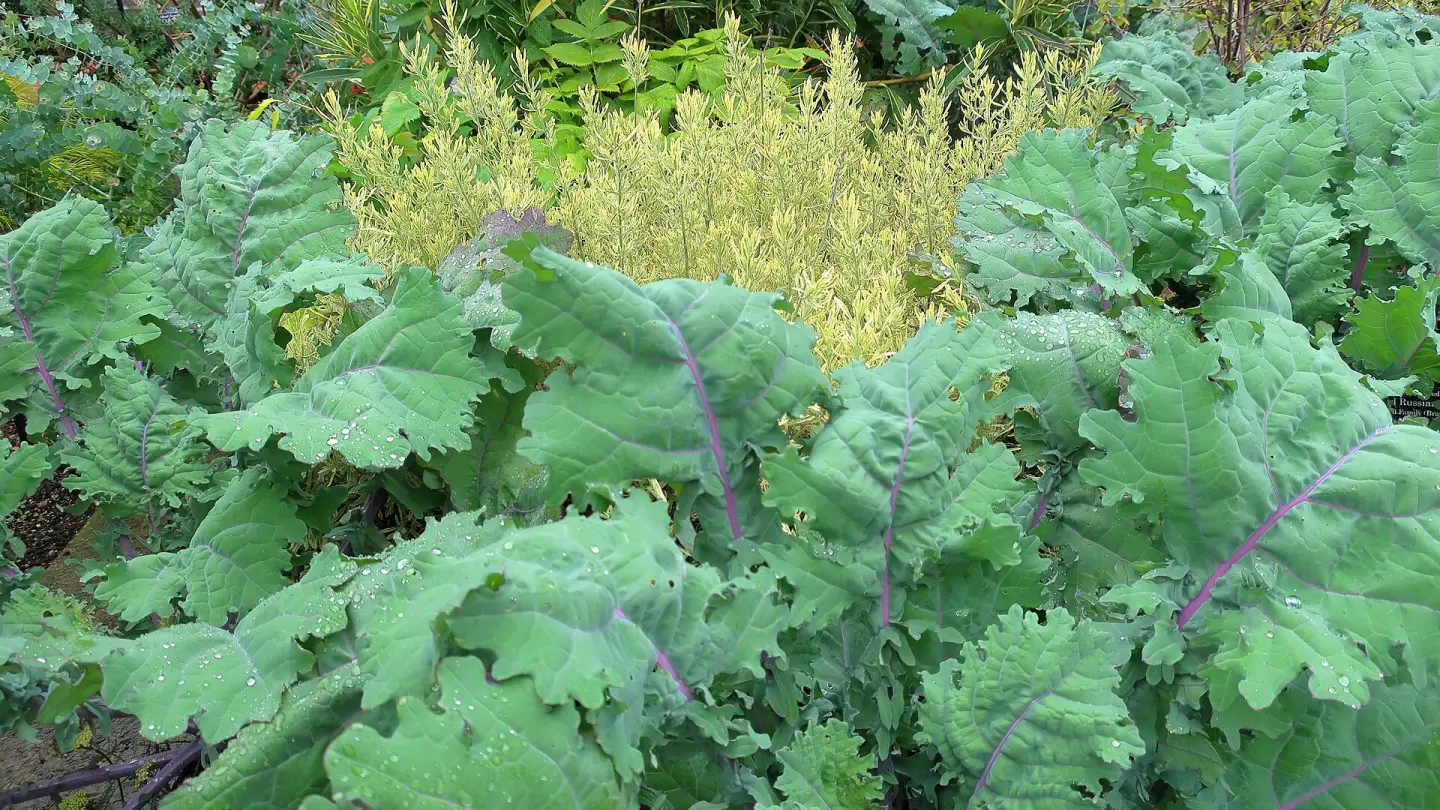
Photo: cultivar413 · CC BY 2.0, via Wikimedia Commons
Essential Care Requirements
Light
Full sun, Partial sun
Watering
Moderate
Keep the soil evenly moist for tender leaves.
Soil
Fertile, well-drained soil with compost; pH 6.0–7.5.
Temperature and humidity
0–27 °C · Moderate humidity
Feeding
Feed every three weeks with a nitrogen-rich organic feed such as vermicompost.
Pruning and propagation
Propagate by seed
Harvest the lower, outer leaves and leave the top growing.
Kale is safe to eat.
Top Cultivation Tips
Cool weather makes the leaves sweeter.
Check leaf undersides for caterpillar eggs.
Pick young leaves for salads and older ones for cooking.
Net plants against butterflies.
Common problems
Aphids
Small, soft-bodied insects that cluster on new shoots and buds, sucking sap and leaving sticky honeydew behind.
How to treat it →PestCabbage looper
A pale green caterpillar that arches its back as it walks and chews ragged holes in cabbage-family and other leafy plants.
How to treat it →PestCabbage white caterpillars
Green or yellow-green caterpillars of white butterflies that chew large holes in cabbage-family leaves and foul the hearts with droppings.
How to treat it →PestCabbage whitefly
Tiny white winged insects that cluster on the undersides of brassica leaves, spreading sticky honeydew and sooty mould.
How to treat it →PestCaterpillars
The larvae of moths and butterflies, which chew holes in leaves, flowers and fruit and can strip a plant in days.
How to treat it →DiseaseClubroot
A soil-borne disease of cabbage-family plants that causes swollen, distorted roots, wilting and stunted growth.
How to treat it →PestPigeon damage
Wood pigeons strip the leaves of brassicas and peas, often in winter when other food is scarce.
How to treat it →PestWhiteflies
Small white flying insects that gather under leaves, sucking sap, spreading viruses and leaving sticky honeydew.
How to treat it →