Insulin Plant
Chamaecostus cuspidatus
The insulin plant is a low, clump-forming perennial with glossy leaves arranged in a spiral around the stems and bright orange flowers. It is popular in Indian home gardens, where the leaves are traditionally chewed, and it grows easily in pots.
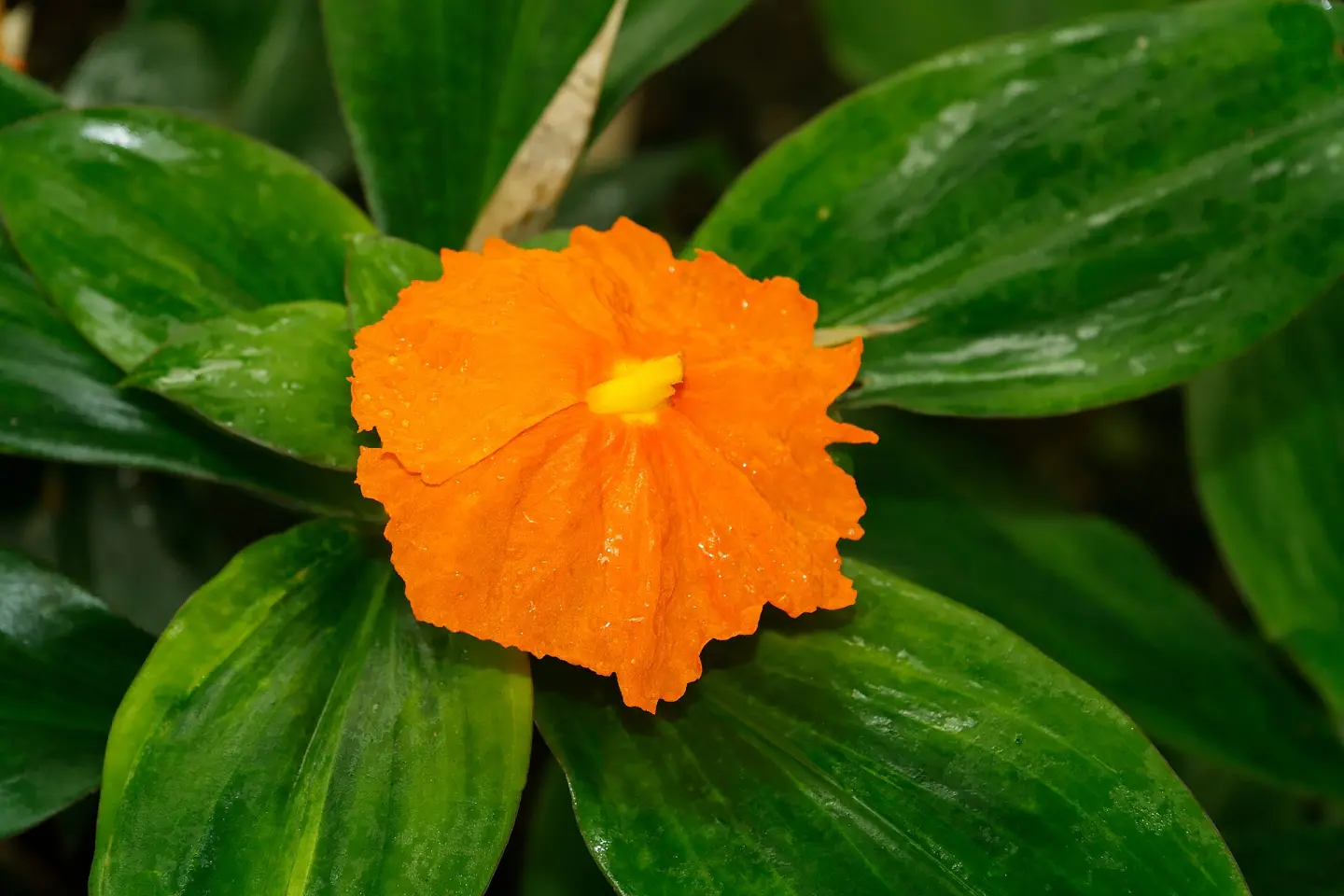
Photo: C T Johansson · CC BY 3.0, via Wikimedia Commons
Essential Care Requirements
Light
Partial sun, Bright indirect light
Watering
Moderate
Keep the soil lightly moist; reduce watering in winter.
Soil
Rich, well-drained potting mix with compost; pH 6.0–7.0.
Temperature and humidity
12–35 °C · High humidity
Feeding
Feed monthly in the growing season with compost or a balanced liquid feed.
Pruning and propagation
Propagate by stem cuttings, division
Remove old, faded stems at the base.
Not known to be toxic. Its traditional use for blood sugar is not a substitute for prescribed treatment.
Top Cultivation Tips
Stem cuttings root easily in moist soil.
Small plantlets often form at the stem tips; pot them up.
Give morning sun and afternoon shade.
Divide clumps every few years.
Common problems
Leaf spot
Fungal or bacterial infections that cause brown, black or purple spots on leaves, often with a yellow halo, leading to early leaf drop.
How to treat it →PestMealybugs
White, cottony insects that hide in leaf joints and under leaves, weakening plants and spreading easily to neighbours.
How to treat it →PestScale insects
Immobile, shell-covered insects that cling to stems and leaves, draining sap and weakening trees and houseplants.
How to treat it →