Indian Almond
Terminalia catappa
Indian almond is a fast-growing tree with tiers of horizontal branches and large leaves that turn red before falling. It gives deep shade, tolerates salt and coastal winds, and its small kernels taste like almonds.
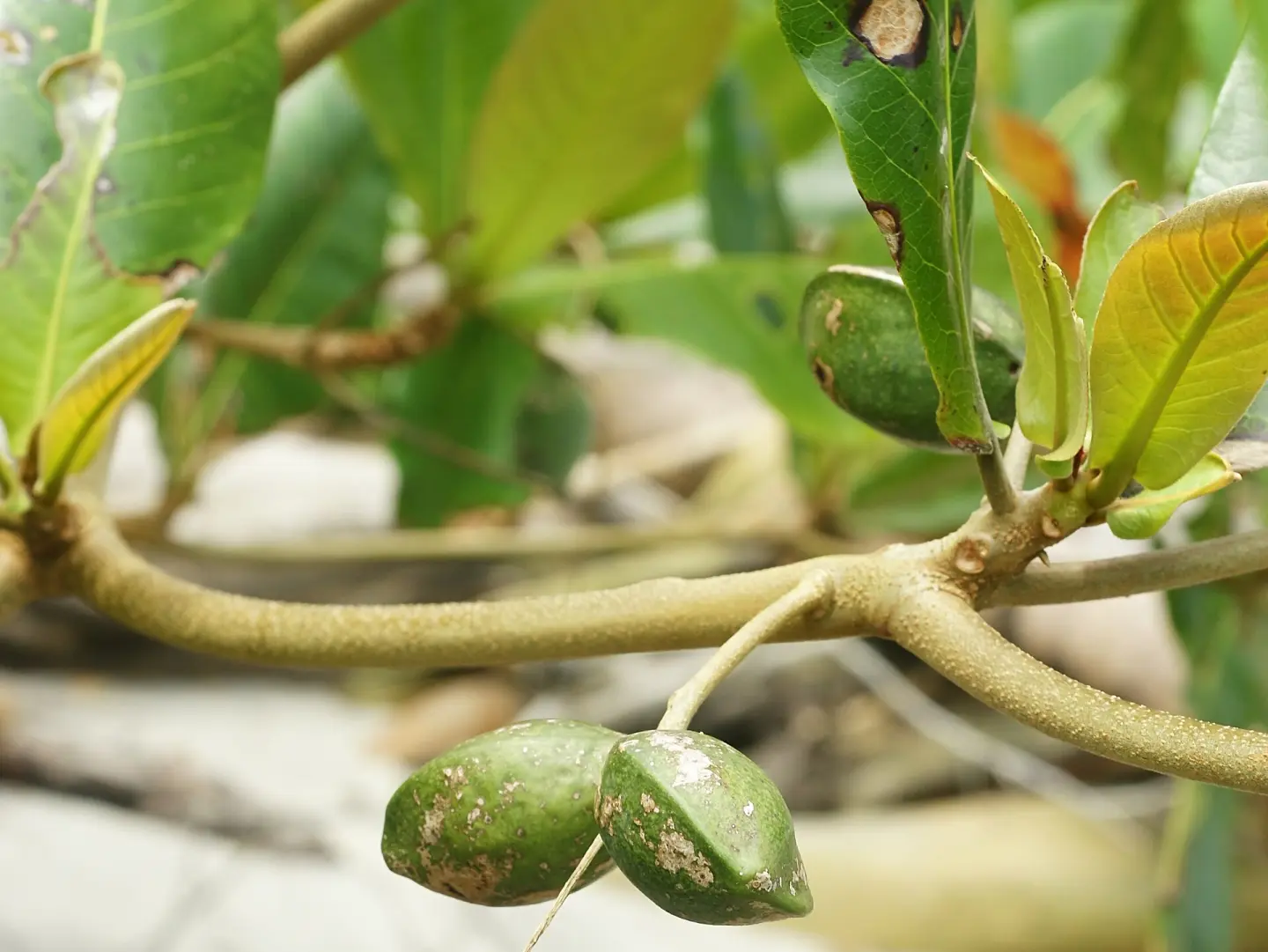
Photo: Hans Hillewaert · CC BY-SA 3.0, via Wikimedia Commons
Essential Care Requirements
Light
Full sun
Watering
Moderate
Water young trees regularly. Mature trees are tolerant of drought and salty air.
Soil
Sandy or loamy, well-drained soil; pH 5.5–8.0.
Temperature and humidity
10–42 °C · High humidity
Feeding
Not usually needed.
Pruning and propagation
Propagate by seed
Shape young trees to a single trunk and raise the lower branches.
The kernels are edible.
Top Cultivation Tips
Excellent shade tree for coastal gardens.
Dried leaves are used in aquariums.
Plant away from paved areas; fallen leaves and fruit are messy.
Seeds germinate easily when fresh.
Common problems
Caterpillars
The larvae of moths and butterflies, which chew holes in leaves, flowers and fruit and can strip a plant in days.
How to treat it →DiseaseLeaf spot
Fungal or bacterial infections that cause brown, black or purple spots on leaves, often with a yellow halo, leading to early leaf drop.
How to treat it →