Hyssop
Hyssopus officinalis
Hyssop is a hardy, evergreen herb with narrow aromatic leaves and spikes of blue-violet flowers that bees and butterflies adore. Its minty, slightly bitter leaves flavour salads and soups, and it makes a neat low hedge for sunny gardens.
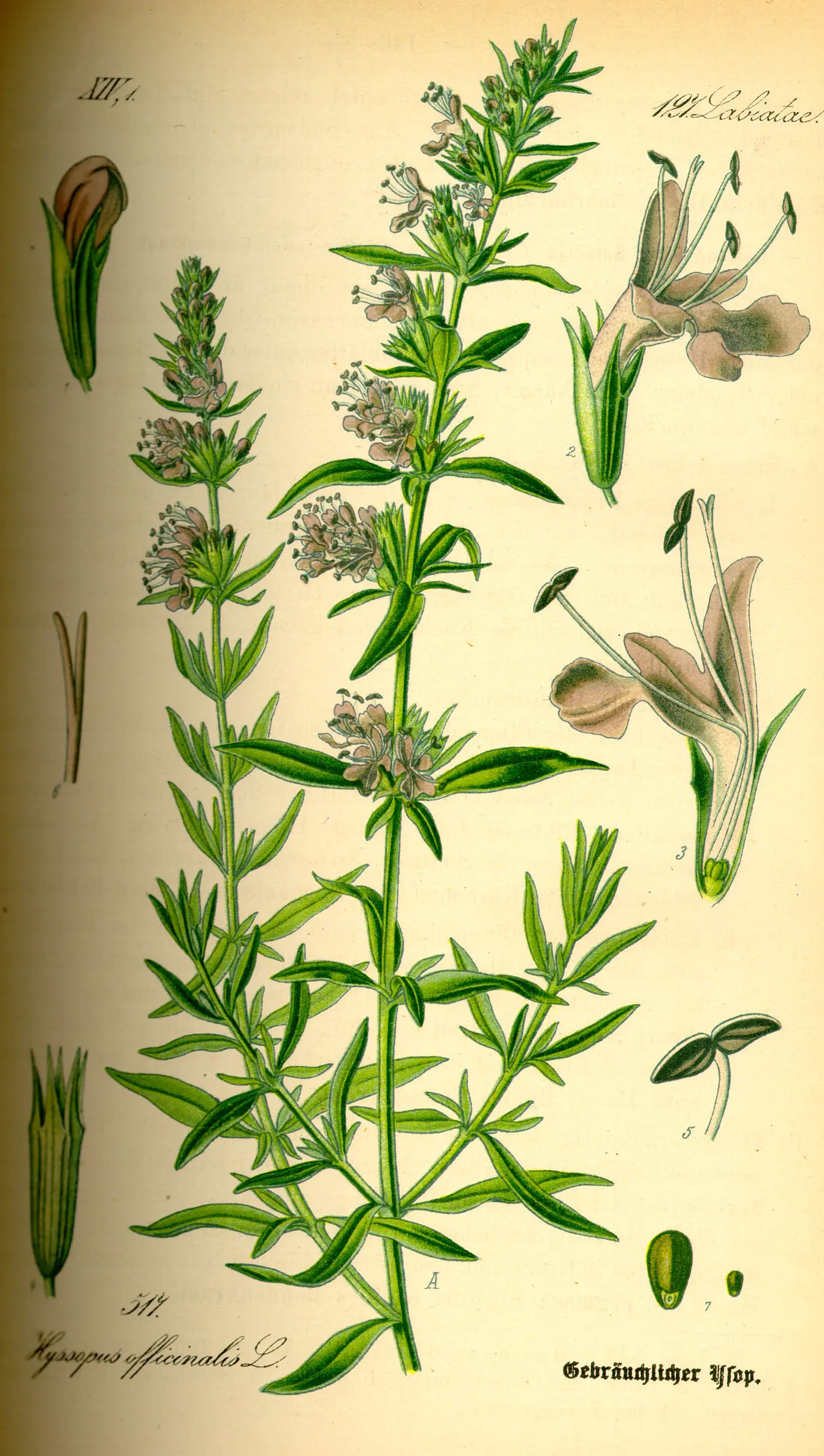
Photo: Topjabot · Public domain, via Wikimedia Commons
Essential Care Requirements
Light
Full sun
Watering
Low
Water young plants until established, then rarely. It thrives in dry soil, and wet roots rot.
Soil
Light, well-drained, neutral to alkaline soil; pH 6.5 to 8.0.
Temperature and humidity
-25–32 °C · Low humidity
Feeding
No feeding is needed in average soil.
Pruning and propagation
Propagate by seed, stem cuttings, division
Trim in spring to keep plants compact and cut lightly after flowering to maintain shape.
Safe in culinary amounts. The essential oil is toxic in large quantities and should be avoided in pregnancy.
Top Cultivation Tips
Use young leaves sparingly in cooking, as the flavour is strong.
Trim to make a low, fragrant edging.
Take softwood cuttings in early summer.
Plant near cabbages to attract pollinators.
Common problems
Aphids
Small, soft-bodied insects that cluster on new shoots and buds, sucking sap and leaving sticky honeydew behind.
How to treat it →PestLeaf miners
Larvae of small flies and moths that tunnel inside leaves, leaving pale, winding trails.
How to treat it →DiseaseRoot rot
Roots decay in waterlogged soil, so the plant wilts and yellows even though the soil is wet.
How to treat it →PestSpider mites
Tiny sap-sucking mites that thrive in hot, dry conditions, causing speckled, dull leaves and fine webbing.
How to treat it →