Helenium
Helenium autumnale
Heleniums produce masses of daisy-like flowers with raised centres in rich shades of yellow, orange, copper and mahogany, from midsummer to autumn. They are tough, long-flowering perennials for sunny borders and are popular with bees and butterflies.
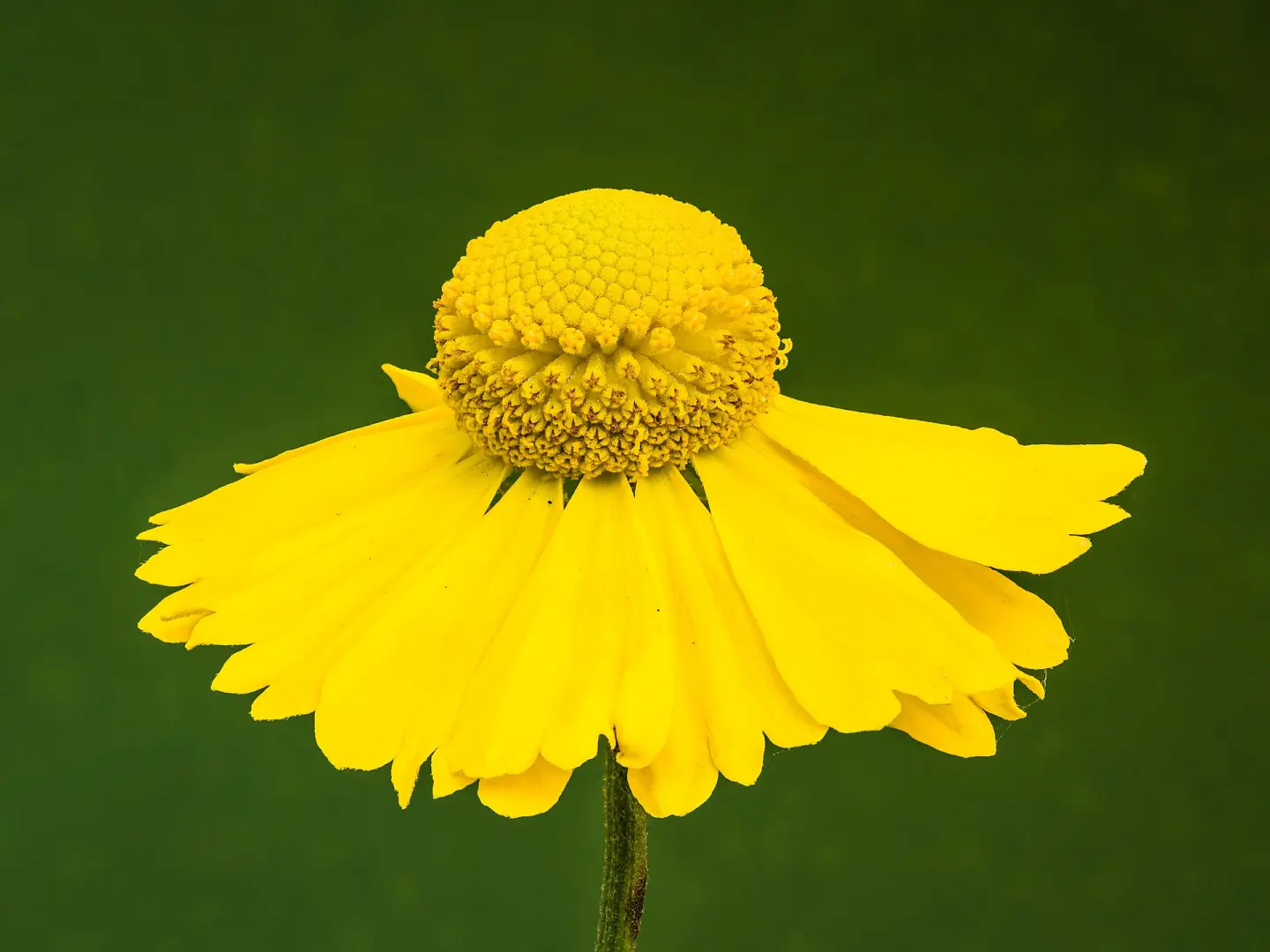
Photo: Dominicus Johannes Bergsma · CC BY-SA 4.0, via Wikimedia Commons
Essential Care Requirements
Light
Full sun
Watering
Moderate
Keep moist in dry weather. They prefer consistently moist soil and wilt in drought.
Soil
Fertile, moist, well-drained soil; pH 5.5 to 7.0.
Temperature and humidity
-30–30 °C · Moderate humidity
Feeding
Feed in spring with a balanced fertilizer and mulch with compost.
Pruning and propagation
Propagate by division, seed, stem cuttings
Cut back by half in late spring (the Chelsea chop) for shorter, bushier plants. Cut to the base in autumn.
Plants may be mildly toxic to pets if eaten. Sap can irritate skin.
Top Cultivation Tips
Divide every two to three years in spring to keep vigour.
Stake tall varieties, or cut back in late spring.
Water well in dry spells.
Deadhead for a longer display.
Common problems
Aphids
Small, soft-bodied insects that cluster on new shoots and buds, sucking sap and leaving sticky honeydew behind.
How to treat it →DiseaseLeaf spot
Fungal or bacterial infections that cause brown, black or purple spots on leaves, often with a yellow halo, leading to early leaf drop.
How to treat it →DiseasePowdery mildew
A fungal disease that coats leaves, buds and young shoots with a white, flour-like dust, weakening the plant and spoiling flowers and fruit.
How to treat it →PestSnails and slugs
Night-feeding molluscs that chew ragged holes in leaves, seedlings and soft stems, especially in wet weather.
How to treat it →