Hebe
Hebe x franciscana
Hebes are neat evergreen shrubs with glossy leaves and spikes of purple, pink or white flowers that bees love. They suit coastal and city gardens, hedges and pots, and many flower for months from summer to autumn.
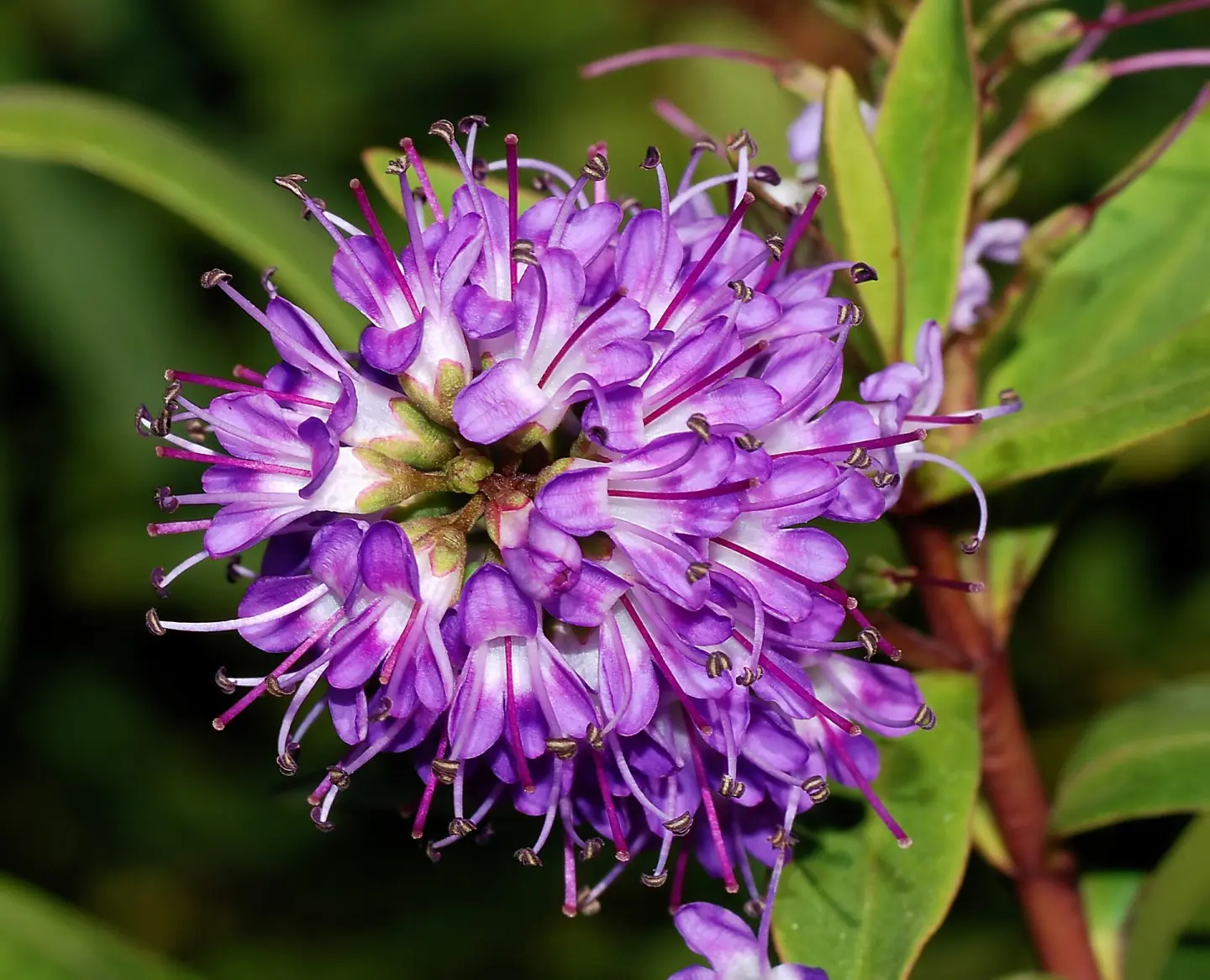
Photo: Alvesgaspar · CC BY-SA 3.0, via Wikimedia Commons
Essential Care Requirements
Light
Full sun, Partial sun
Watering
Moderate
Water young plants regularly. Mature plants need water only in prolonged drought.
Soil
Moist but well-drained soil, any pH; pH 5.5 to 7.5.
Temperature and humidity
-8–30 °C · Moderate humidity
Feeding
Feed with a balanced fertilizer in spring. Mulch with compost.
Pruning and propagation
Propagate by stem cuttings
Trim lightly after flowering to shape. Large-leaved types can be cut back hard in spring if frost-damaged.
Non-toxic.
Top Cultivation Tips
Choose small-leaved hardy types for cold regions.
Plant in a sheltered spot away from cold wind.
Take semi-ripe cuttings in late summer.
Prune out frost-damaged shoots in spring.
Common problems
Downy mildew
A water-mould disease that causes yellow patches on top of leaves and grey-purple fuzz underneath, spreading fast in cool, wet weather.
How to treat it →DiseaseFrost damage
Injury caused when ice forms inside plant tissue, turning leaves, flowers and shoots black, limp or papery after a cold night.
How to treat it →DiseaseLeaf spot
Fungal or bacterial infections that cause brown, black or purple spots on leaves, often with a yellow halo, leading to early leaf drop.
How to treat it →DiseaseRoot rot
Roots decay in waterlogged soil, so the plant wilts and yellows even though the soil is wet.
How to treat it →