Gulmohar
Delonix regia
Gulmohar is one of the world's most spectacular flowering trees, covered in brilliant scarlet-orange blossom in April and May. Its wide, umbrella-shaped canopy of feathery leaves gives light shade on summer streets and in large gardens.
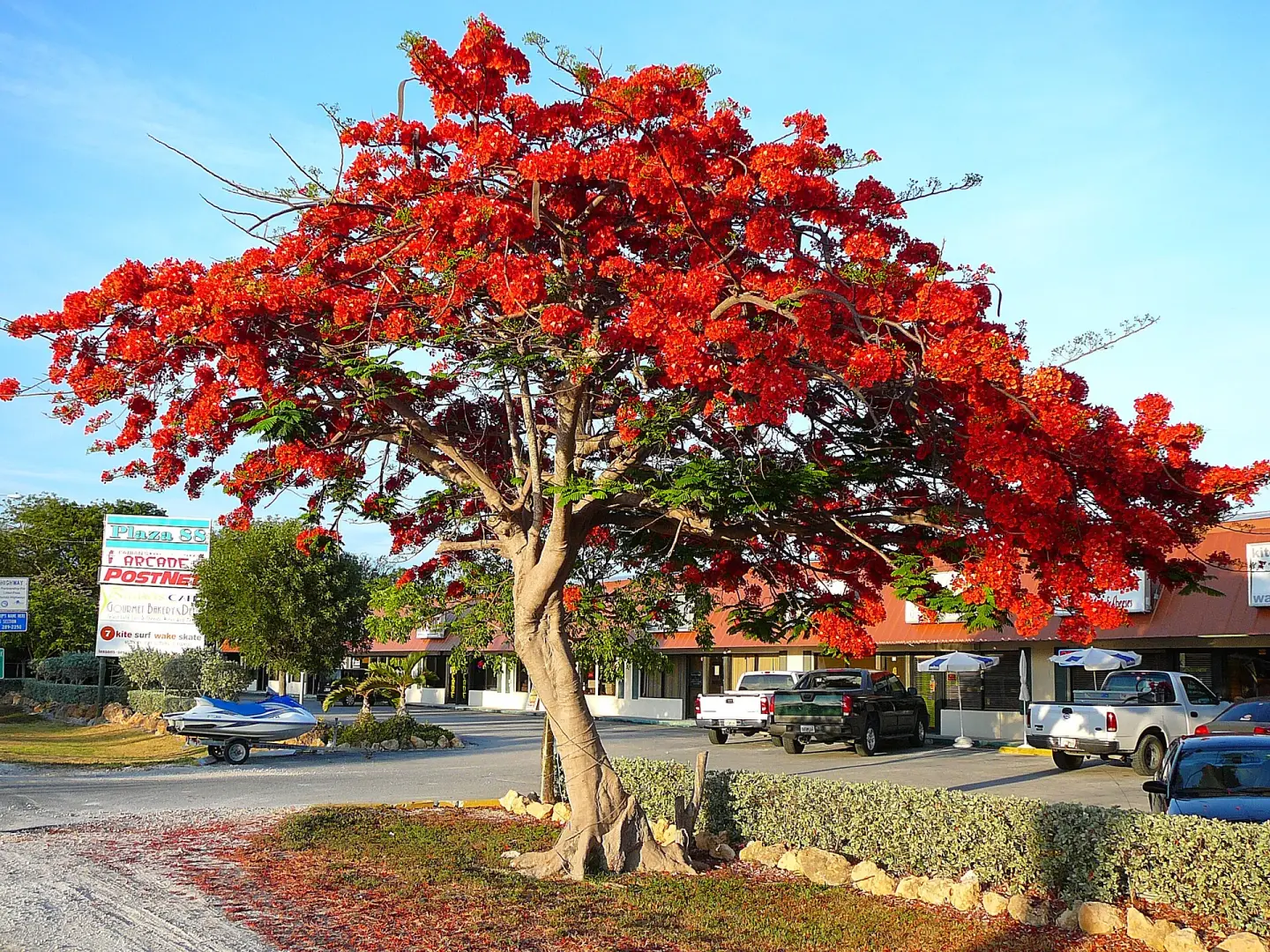
Photo: Averette · CC BY-SA 3.0, via Wikimedia Commons
Essential Care Requirements
Light
Full sun
Watering
Low
Water young trees regularly. Mature trees are drought tolerant.
Soil
Most well-drained soils; pH 6.0–8.0.
Temperature and humidity
5–45 °C · Moderate humidity
Feeding
Rarely needed; compost once a year helps young trees.
Pruning and propagation
Propagate by seed, stem cuttings
Shape young trees to a strong, single trunk. Remove weak or low branches, as the wood is brittle in storms.
Not known to be toxic, but the seeds and long pods should not be eaten.
Top Cultivation Tips
Plant at least 6 m from buildings; roots are shallow and spreading.
Nick and soak seeds before sowing.
Flowers appear before or with new leaves.
Bonsai growers prize it for its small leaves.
Common problems
Caterpillars
The larvae of moths and butterflies, which chew holes in leaves, flowers and fruit and can strip a plant in days.
How to treat it →PestScale insects
Immobile, shell-covered insects that cling to stems and leaves, draining sap and weakening trees and houseplants.
How to treat it →PestTermites
Soil-dwelling social insects that eat roots and the base of stems, killing seedlings and weakening trees.
How to treat it →