Grapes
Vitis vinifera
The grapevine is a deciduous climber that bears bunches of sweet fruit when trained on a pergola, wall or wires. In India it fruits best in dry, warm regions with a cool winter, and careful pruning is the key to a good crop.
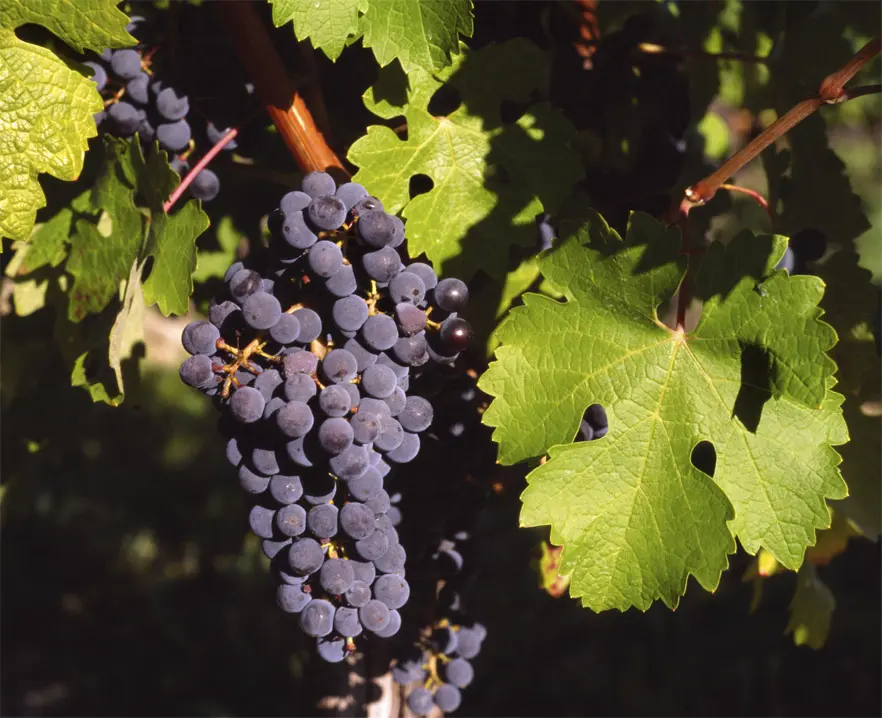
Photo: Dodo (Wikimedia Commons) · CC BY-SA 3.0, via Wikimedia Commons
Essential Care Requirements
Light
Full sun
Watering
Moderate
Water deeply but infrequently. Reduce watering as fruit ripens to concentrate the sugars, and avoid wetting leaves and bunches.
Soil
Deep, well-drained loam; pH 6.5–7.5. Vines dislike wet roots.
Temperature and humidity
5–40 °C · Low humidity
Feeding
Feed with compost after pruning and a potassium-rich fertilizer as bunches develop.
Pruning and propagation
Propagate by stem cuttings, grafting, layering
Grapes fruit on the current season's shoots. Prune hard in the dormant season, leaving a few buds on each spur, and in tropical areas follow the two-pruning system used locally.
Grapes and raisins are safe for people but can cause kidney failure in dogs and cats, even in small amounts.
Top Cultivation Tips
Grow on a strong pergola or wires in full sun.
Thin crowded bunches for larger berries.
Hardwood cuttings root well in winter.
Net bunches against birds as they ripen.
Common problems
Anthracnose
A fungal disease that causes dark, sunken spots on leaves, flowers and fruit, especially mango, chilli and papaya.
How to treat it →PestBirds pecking fruit
Birds that peck at ripening soft fruit, taking bites or whole berries just as they are ready to pick.
How to treat it →DiseaseBlack rot of grapes
A fungal disease of grapes that causes brown leaf spots and turns berries into hard, shrivelled black mummies.
How to treat it →DiseaseCrown gall
A bacterial disease that forms rough, woody, tumour-like swellings at the base of the stem and on roots of many fruit and ornamental plants.
How to treat it →DiseaseDowny mildew
A water-mould disease that causes yellow patches on top of leaves and grey-purple fuzz underneath, spreading fast in cool, wet weather.
How to treat it →PestJapanese beetle
Metallic green and copper beetles that skeletonise leaves and devour flowers in summer, while their grubs feed on lawn roots.
How to treat it →DiseaseMagnesium deficiency
Older leaves turn yellow between the veins while the veins stay green, often with reddish or purple tints.
How to treat it →PestMealybugs
White, cottony insects that hide in leaf joints and under leaves, weakening plants and spreading easily to neighbours.
How to treat it →DiseasePowdery mildew
A fungal disease that coats leaves, buds and young shoots with a white, flour-like dust, weakening the plant and spoiling flowers and fruit.
How to treat it →PestRaccoons
Nocturnal, clever mammals that raid sweetcorn, melons, grapes and fruit at night and dig lawns for grubs.
How to treat it →PestSpotted lanternfly
An invasive planthopper that feeds in groups on sap from grapes, fruit trees and many other plants, leaving sticky honeydew and sooty mould.
How to treat it →DiseaseZinc deficiency
A trace-element shortage that causes small, narrow, yellowing leaves bunched on short shoots, most often on alkaline or sandy soils.
How to treat it →