Fennel
Foeniculum vulgare
Fennel is a tall, feathery herb grown for its aniseed-flavoured seeds (saunf), leaves and, in Florence fennel varieties, swollen bulbs. Its yellow flower heads attract many helpful insects.
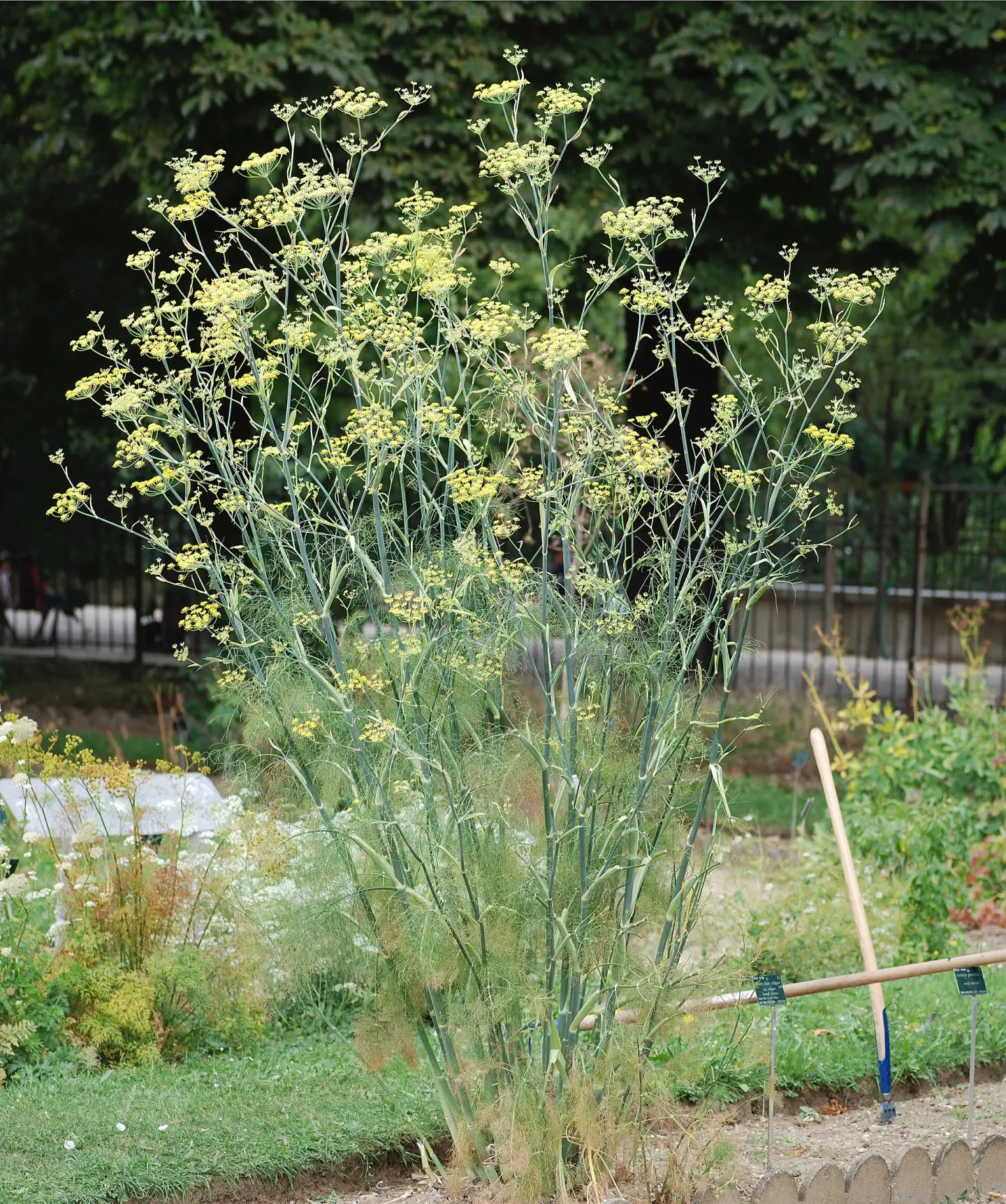
Photo: Alvesgaspar · CC BY-SA 3.0, via Wikimedia Commons
Essential Care Requirements
Light
Full sun
Watering
Moderate
Water when the top of the soil dries. Bulb fennel needs steady moisture to avoid bolting.
Soil
Well-drained, fertile loam; pH 6.0–7.5.
Temperature and humidity
5–30 °C · Low humidity
Feeding
Feed monthly with compost tea or a balanced fertilizer.
Pruning and propagation
Propagate by seed
Snip leaves as needed. Remove flower heads if growing for leaves or bulbs.
Fennel is safe to eat and is not known to be toxic to cats or dogs.
Top Cultivation Tips
Sow directly; fennel dislikes transplanting.
Keep it away from dill to prevent cross-pollination.
Harvest seed heads when they turn greenish-brown.
Dry seeds in shade to keep their colour.
Common problems
Aphids
Small, soft-bodied insects that cluster on new shoots and buds, sucking sap and leaving sticky honeydew behind.
How to treat it →PestCaterpillars
The larvae of moths and butterflies, which chew holes in leaves, flowers and fruit and can strip a plant in days.
How to treat it →DiseasePowdery mildew
A fungal disease that coats leaves, buds and young shoots with a white, flour-like dust, weakening the plant and spoiling flowers and fruit.
How to treat it →