Crocosmia
Crocosmia x crocosmiiflora
Crocosmias bring fiery red, orange and yellow arching flower stems and sword-like leaves to the summer border. They grow from corms, spread steadily, and Lucifer is the tallest and showiest with scarlet flowers.
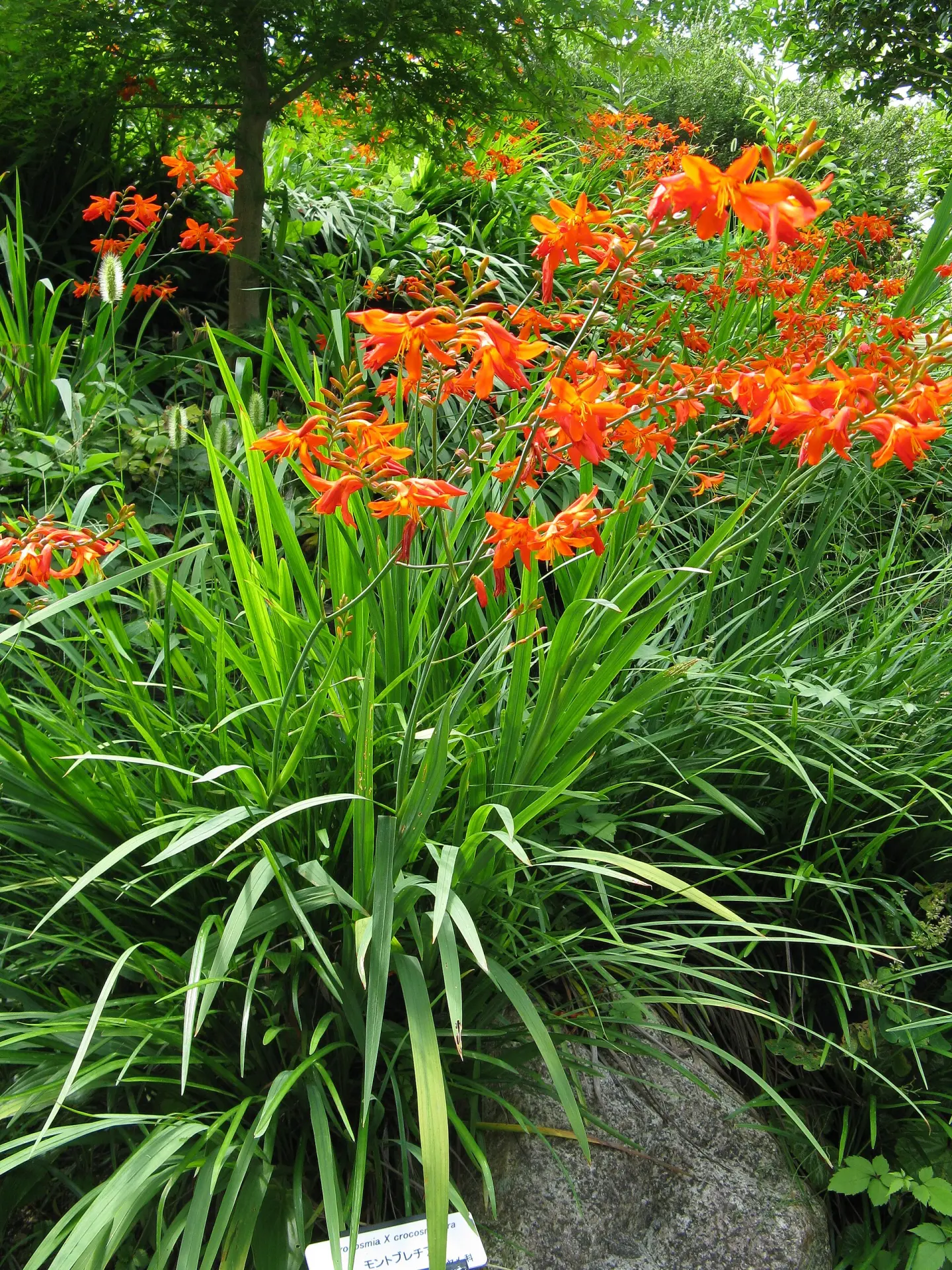
Photo: KENPEI · CC BY-SA 3.0, via Wikimedia Commons
Essential Care Requirements
Light
Full sun, Partial sun
Watering
Moderate
Water in dry spells while in growth, and water well when the flower stems appear. Avoid waterlogging in winter.
Soil
Fertile, moist but well-drained soil; pH 6.0 to 7.0.
Temperature and humidity
-15–30 °C · Moderate humidity
Feeding
Feed with a potassium-rich fertilizer in spring and mulch with compost.
Pruning and propagation
Propagate by division, offsets
Cut down dead foliage in late winter. Divide clumps every few years.
Mildly toxic to pets if corms are eaten.
Top Cultivation Tips
Plant corms 8 to 10 cm deep in spring.
Mulch in colder areas to protect corms over winter.
Divide congested clumps in spring.
Choose named hardy varieties in cold regions.
Common problems
Rust
A fungal disease that forms orange, brown or yellow powdery pustules, mainly on leaf undersides.
How to treat it →PestSnails and slugs
Night-feeding molluscs that chew ragged holes in leaves, seedlings and soft stems, especially in wet weather.
How to treat it →PestSpider mites
Tiny sap-sucking mites that thrive in hot, dry conditions, causing speckled, dull leaves and fine webbing.
How to treat it →PestThrips
Tiny, slender insects that rasp leaf and flower surfaces, leaving silvery streaks, curled leaves and distorted flowers.
How to treat it →