Cowpea
Vigna unguiculata
Cowpea is a heat-loving, drought-tolerant legume grown for its tender green pods, fresh seeds and dried beans. It fixes nitrogen, thrives in poor soil and is one of the easiest pulses for warm-climate gardens.
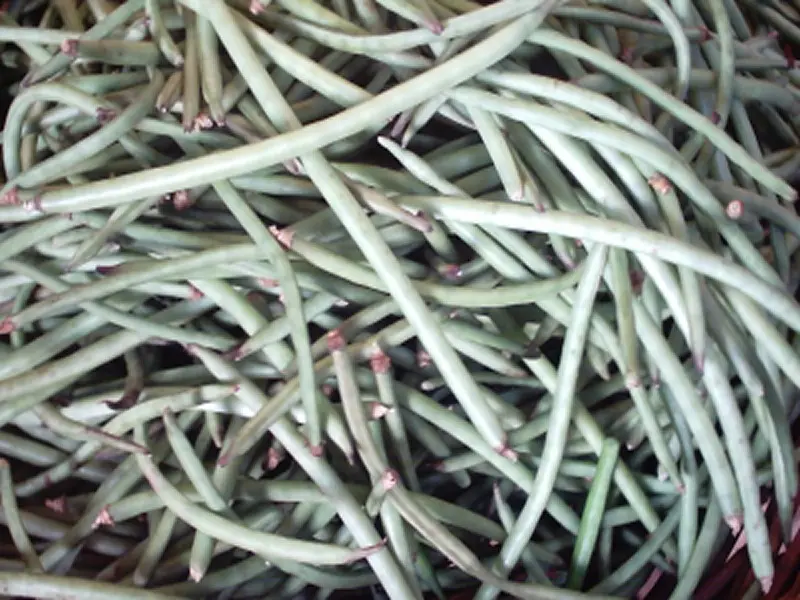
Photo: HeraldDesa at English Wikipedia · CC BY-SA 3.0, via Wikimedia Commons
Essential Care Requirements
Light
Full sun
Watering
Low
Water after sowing and during flowering and pod fill. Otherwise it copes well with dry spells, and overwatering reduces pod set.
Soil
Light, well-drained sandy loam; pH 5.5 to 7.0. It grows in poor soil but not in waterlogged ground.
Temperature and humidity
15–40 °C · Moderate humidity
Feeding
Little feeding is needed. Mix in compost before sowing and add some phosphorus-rich fertilizer such as bone meal if the soil is poor.
Pruning and propagation
Propagate by seed
Pinch the tips of bush types to encourage branching, and give climbing types a trellis.
Cook dried beans well before eating. Pods and leaves are safe to eat cooked.
Top Cultivation Tips
Sow seeds 3 cm deep and 10 to 15 cm apart directly in warm soil.
Pick green pods often to keep the plant producing.
Leave pods to dry on the plant for dried beans.
Use it as a cover crop between vegetable seasons to enrich the soil.
Common problems
Aphids
Small, soft-bodied insects that cluster on new shoots and buds, sucking sap and leaving sticky honeydew behind.
How to treat it →DiseasePowdery mildew
A fungal disease that coats leaves, buds and young shoots with a white, flour-like dust, weakening the plant and spoiling flowers and fruit.
How to treat it →PestWhiteflies
Small white flying insects that gather under leaves, sucking sap, spreading viruses and leaving sticky honeydew.
How to treat it →