Bergenia
Bergenia cordifolia
Bergenias form tough, evergreen rosettes of large, leathery, glossy leaves, which often turn red in winter, with spikes of pink flowers in spring. They are excellent ground cover for shade, edges and difficult spots.
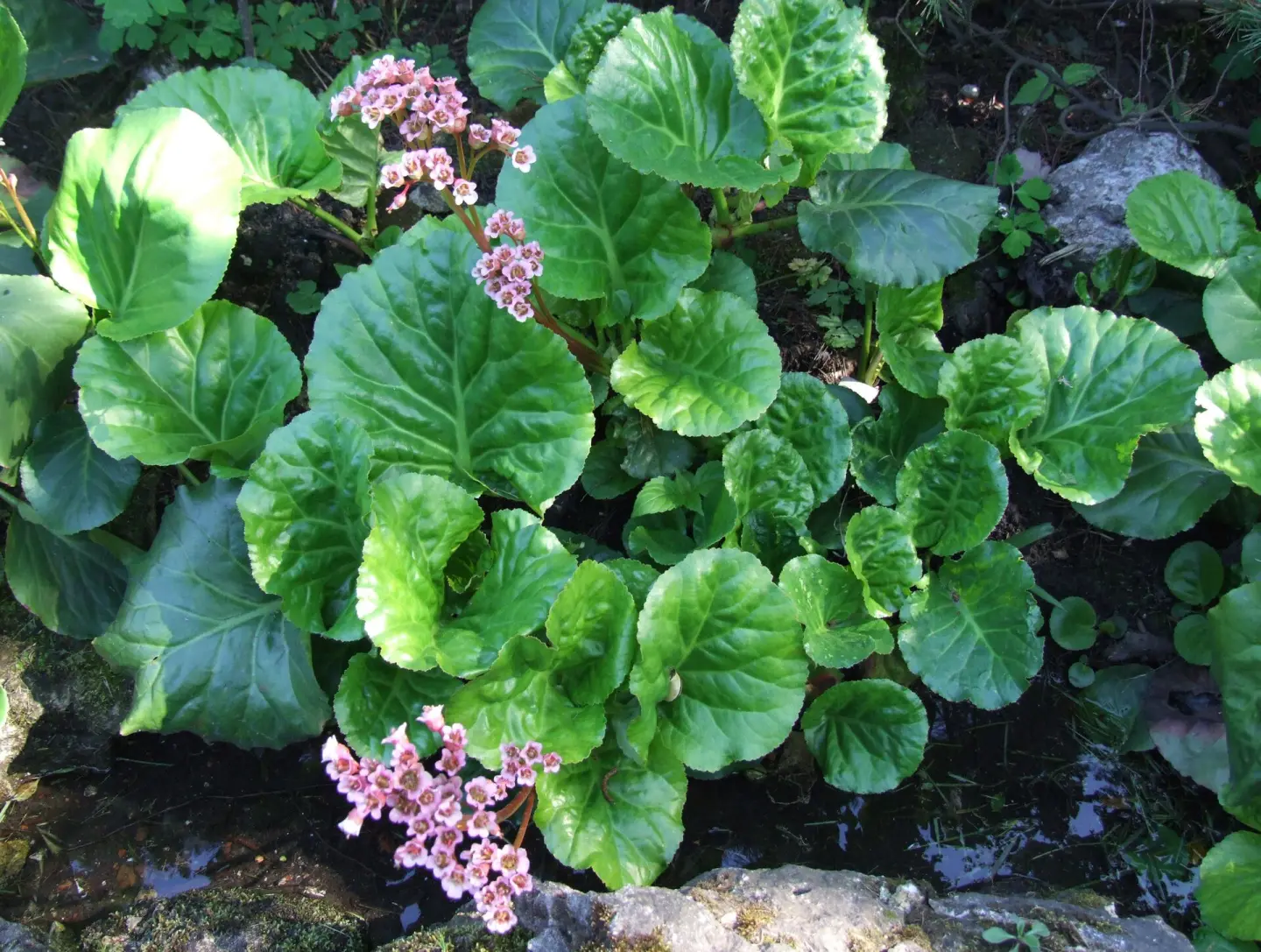
Photo: Jerzy Opioła · CC BY-SA 4.0, via Wikimedia Commons
Essential Care Requirements
Light
Partial sun, Full sun, Low light
Watering
Low
Water new plants until established. Mature plants tolerate dry shade.
Soil
Almost any soil, from dry to moist; pH 5.5 to 7.5.
Temperature and humidity
-35–30 °C · Moderate humidity
Feeding
Mulch with compost in spring. No extra feeding is needed.
Pruning and propagation
Propagate by division
Remove old, damaged leaves and spent flower stems. Divide congested clumps after flowering.
Non-toxic.
Top Cultivation Tips
Plant in groups for ground cover.
Leaves colour best in a sunnier position in winter.
Divide every few years in late spring.
Protect flowers from late frost by planting out of frost pockets.
Common problems
Frost damage
Injury caused when ice forms inside plant tissue, turning leaves, flowers and shoots black, limp or papery after a cold night.
How to treat it →DiseaseLeaf spot
Fungal or bacterial infections that cause brown, black or purple spots on leaves, often with a yellow halo, leading to early leaf drop.
How to treat it →PestSnails and slugs
Night-feeding molluscs that chew ragged holes in leaves, seedlings and soft stems, especially in wet weather.
How to treat it →PestVine weevil
Adult beetles notch leaf edges at night, while their soil-dwelling grubs eat roots, often killing container plants before you notice.
How to treat it →