Bengal Clock Vine
Thunbergia grandiflora
A vigorous evergreen climber with large heart-shaped leaves and hanging clusters of sky-blue trumpet flowers. It covers pergolas, fences and arches quickly and flowers for much of the year in warm climates.
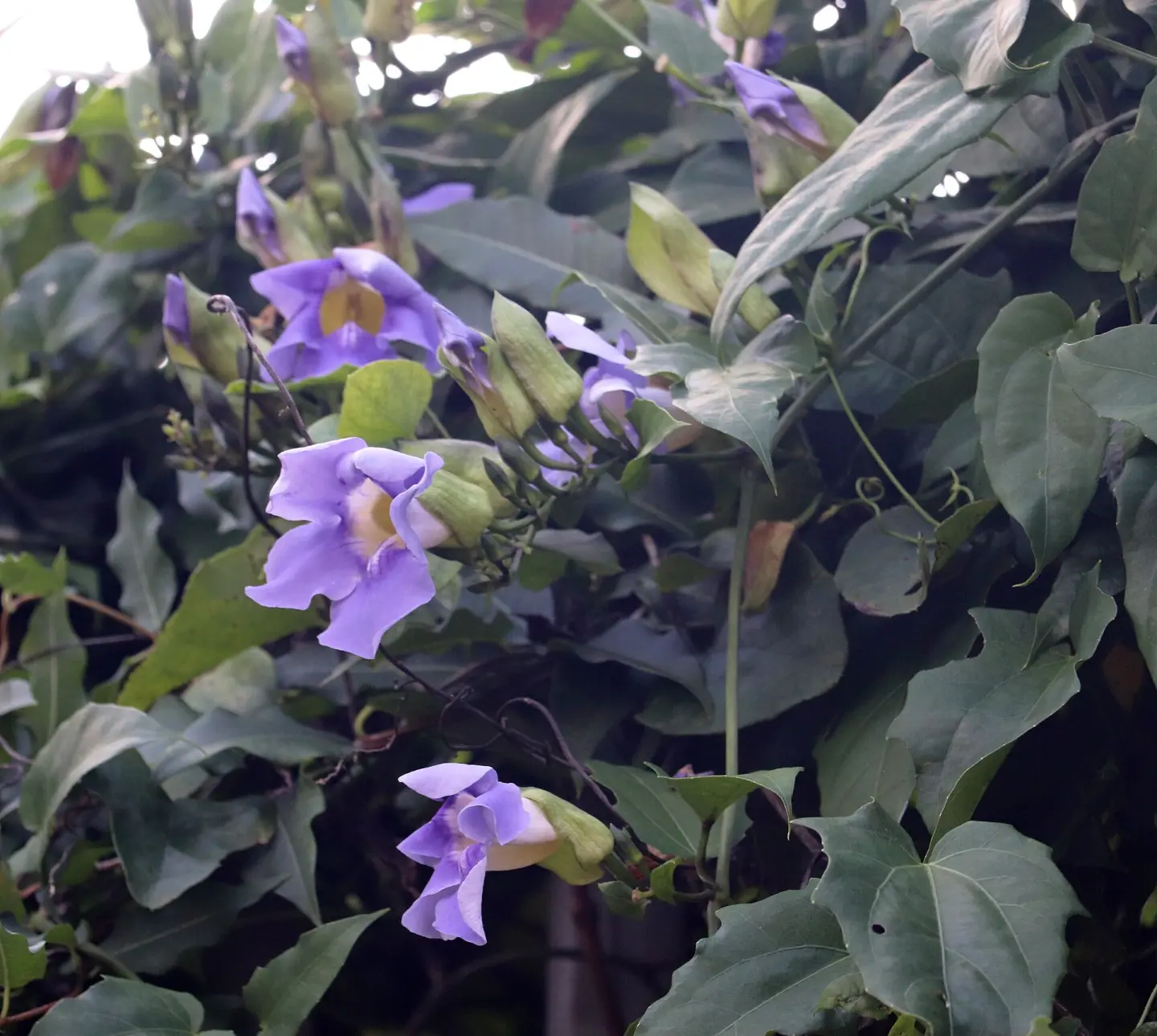
Photo: Don McCulley · CC BY-SA 4.0, via Wikimedia Commons
Essential Care Requirements
Light
Full sun, Partial sun
Watering
Moderate
Water deeply once or twice a week, more in dry weather. Established vines tolerate short dry spells.
Soil
Rich, moist, well-drained soil with compost; pH 6.0 to 7.0.
Temperature and humidity
8–38 °C · High humidity
Feeding
Feed every month in the growing season with a balanced fertilizer and mulch with compost.
Pruning and propagation
Propagate by stem cuttings, layering, division
Cut back hard after the main flowering to control size, and remove tangled and dead growth.
Not considered toxic to people or pets.
Top Cultivation Tips
Provide a strong support, as the vine becomes heavy.
Layer a long stem into the soil to make new plants.
Water well in the dry season to keep it flowering.
Cut back if it starts smothering nearby plants or trees.
Common problems
Aphids
Small, soft-bodied insects that cluster on new shoots and buds, sucking sap and leaving sticky honeydew behind.
How to treat it →DiseaseLeaf spot
Fungal or bacterial infections that cause brown, black or purple spots on leaves, often with a yellow halo, leading to early leaf drop.
How to treat it →PestMealybugs
White, cottony insects that hide in leaf joints and under leaves, weakening plants and spreading easily to neighbours.
How to treat it →PestSpider mites
Tiny sap-sucking mites that thrive in hot, dry conditions, causing speckled, dull leaves and fine webbing.
How to treat it →