Begonia
Begonia spp.
Begonias are a huge group of plants grown for their flowers, their patterned leaves, or both. Wax begonias flower outdoors in partial shade, while rex and cane begonias make striking houseplants.
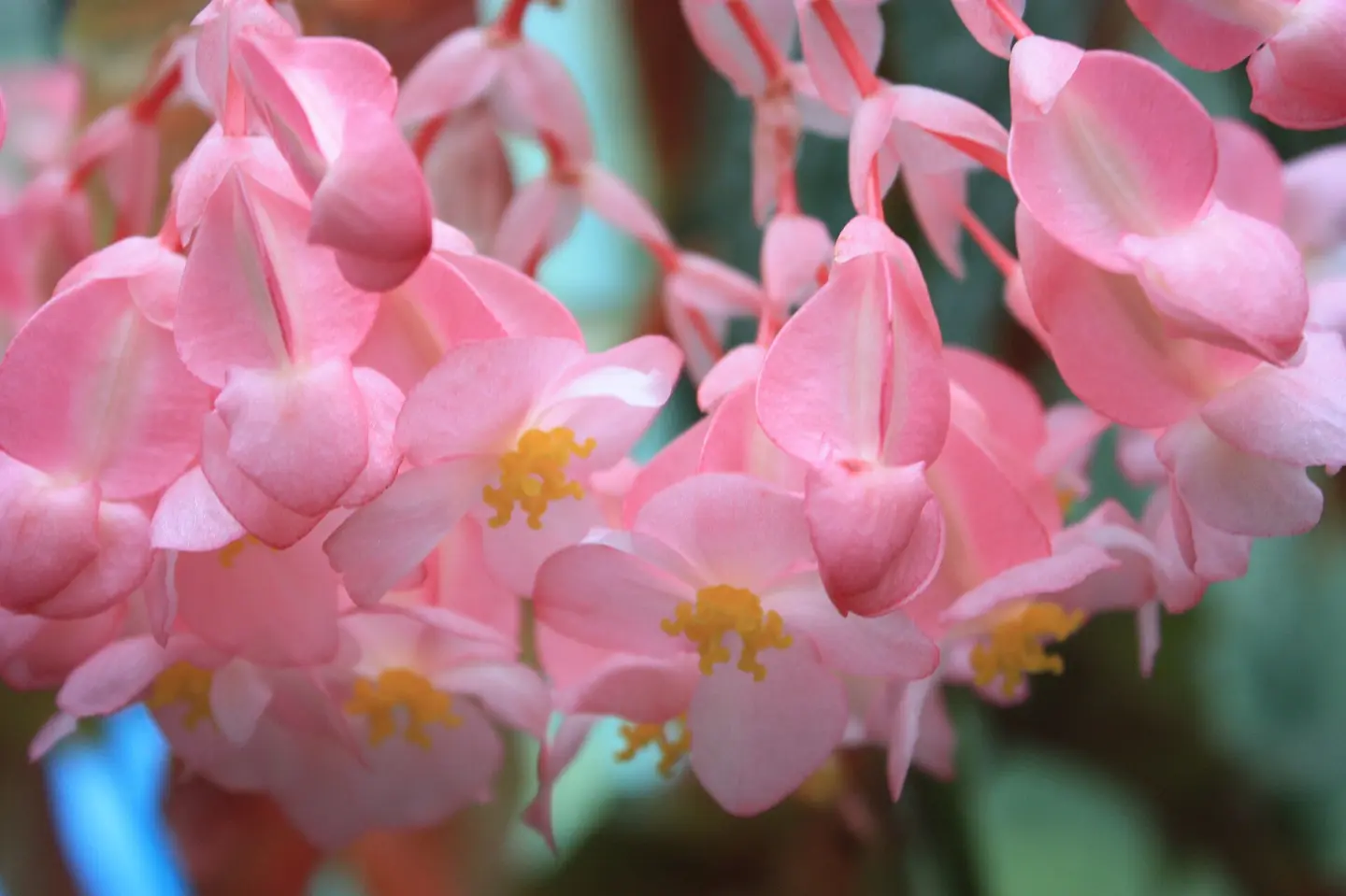
Photo: Stephencdickson · CC BY-SA 4.0, via Wikimedia Commons
Essential Care Requirements
Light
Bright indirect light, Partial sun
Watering
Moderate
Water when the top 2 cm of soil is dry, at the base, keeping water off the leaves.
Soil
Light, well-drained, slightly acidic mix; pH 5.5–6.5.
Temperature and humidity
12–30 °C · High humidity
Feeding
Feed every two weeks in the growing season with a diluted balanced fertilizer.
Pruning and propagation
Propagate by stem cuttings, leaf cuttings, division
Pinch stems to keep plants bushy and remove faded flowers.
Begonias are toxic to cats and dogs, especially the roots and tubers, and can cause mouth irritation and vomiting.
Top Cultivation Tips
Do not mist; wet leaves encourage mildew.
Rex begonias root from leaf pieces.
Shelter from afternoon sun.
Use shallow pots.
Common problems
Broad mites
Microscopic mites that cause twisted, hardened, bronzed leaves and stunted growth on peppers, aubergines and many ornamentals.
How to treat it →PestMealybugs
White, cottony insects that hide in leaf joints and under leaves, weakening plants and spreading easily to neighbours.
How to treat it →DiseasePowdery mildew
A fungal disease that coats leaves, buds and young shoots with a white, flour-like dust, weakening the plant and spoiling flowers and fruit.
How to treat it →DiseaseRoot rot
Roots decay in waterlogged soil, so the plant wilts and yellows even though the soil is wet.
How to treat it →PestVine weevil
Adult beetles notch leaf edges at night, while their soil-dwelling grubs eat roots, often killing container plants before you notice.
How to treat it →