Banyan
Ficus benghalensis
The banyan, India's national tree, is a massive fig whose aerial roots grow down from the branches and thicken into new trunks, allowing one tree to spread over a huge area. It is suited only to very large open spaces but is a classic bonsai subject.
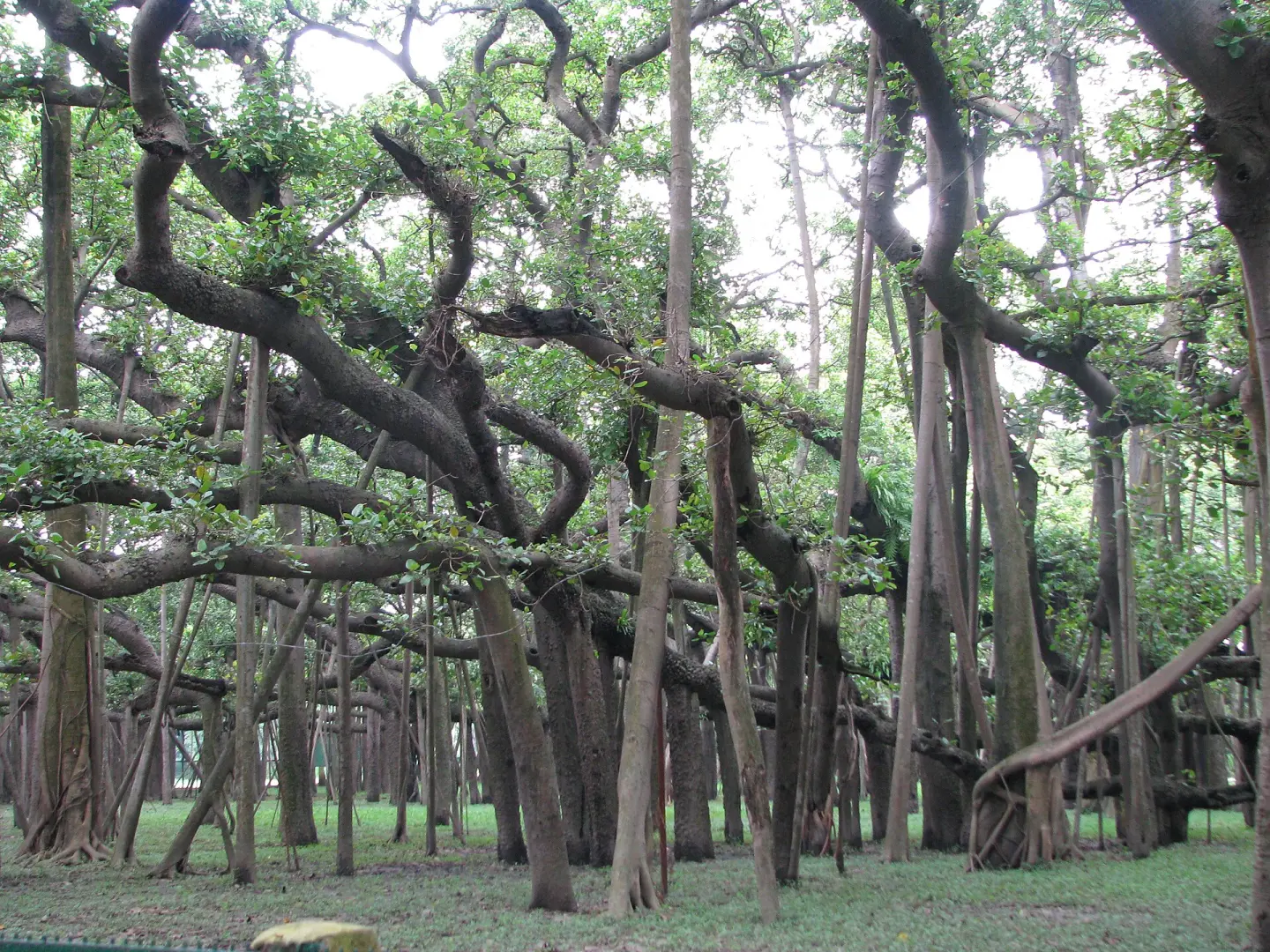
Photo: McKay Savage · CC BY 2.0, via Wikimedia Commons
Essential Care Requirements
Light
Full sun
Watering
Low
Water young trees regularly; mature trees are self-sufficient.
Soil
Deep soil of almost any type; pH 5.5–8.5.
Temperature and humidity
2–46 °C · Moderate humidity
Feeding
Not needed for established trees.
Pruning and propagation
Propagate by stem cuttings, air layering, seed
Guide aerial roots into the ground where new trunks are wanted, and remove the rest.
The milky sap can irritate skin and upset the stomachs of cats and dogs.
Top Cultivation Tips
Plant only in parks, campuses and large grounds.
Bonsai banyans develop aerial roots in humid air.
Thick branch cuttings root easily.
Its red figs feed many birds.
Common problems
Leaf spot
Fungal or bacterial infections that cause brown, black or purple spots on leaves, often with a yellow halo, leading to early leaf drop.
How to treat it →PestMealybugs
White, cottony insects that hide in leaf joints and under leaves, weakening plants and spreading easily to neighbours.
How to treat it →PestScale insects
Immobile, shell-covered insects that cling to stems and leaves, draining sap and weakening trees and houseplants.
How to treat it →