Ash Gourd
Benincasa hispida
Ash gourd is a large, sprawling vine whose big fruit develops a white, waxy bloom as it matures. It is cooked in curries and soups and used to make petha sweets, and mature fruit stores for months.
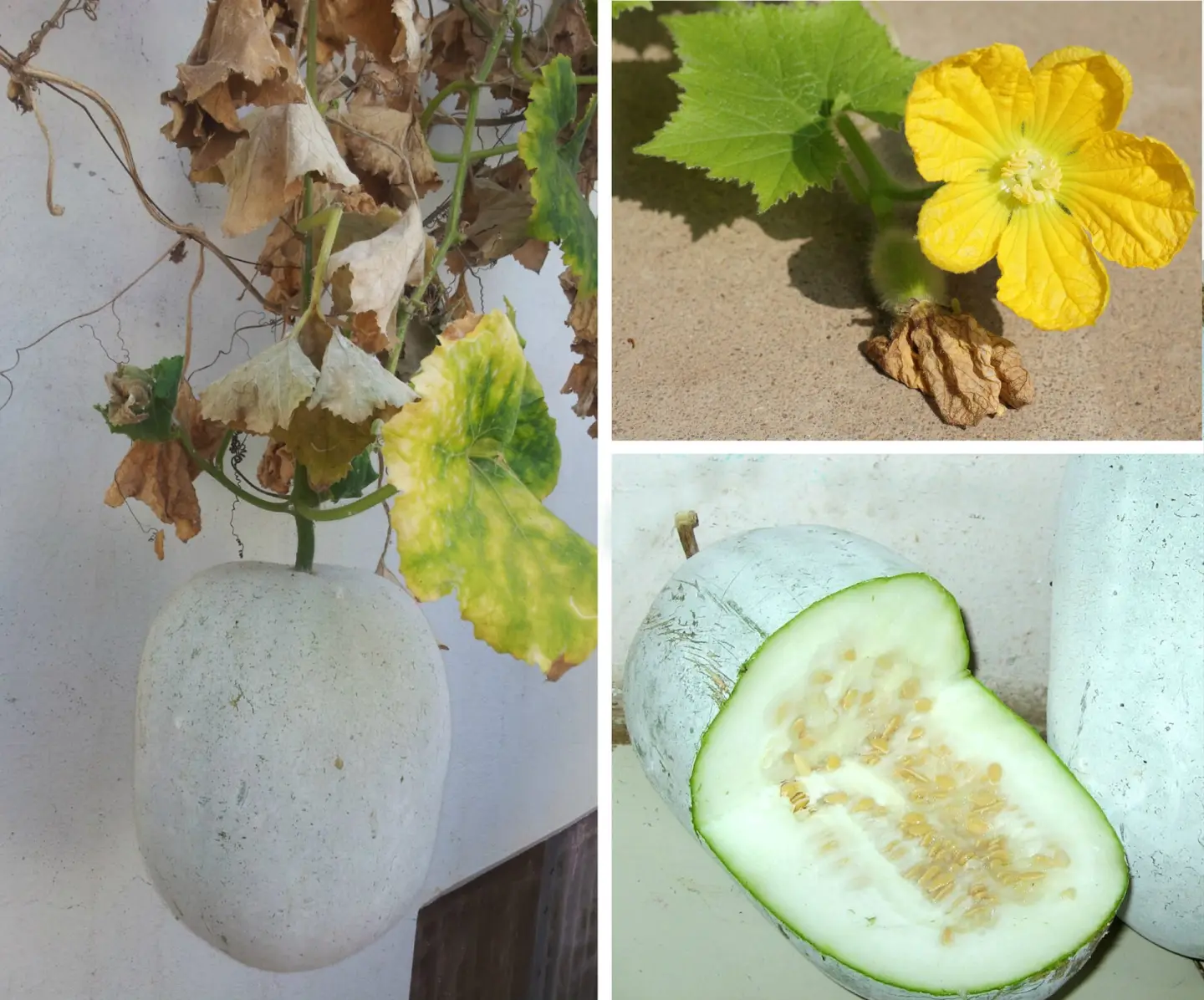
Photo: Akshay.paramatmuni1987 and others · CC BY-SA 3.0, via Wikimedia Commons
Essential Care Requirements
Light
Full sun
Watering
Moderate
Water deeply once or twice a week, more in containers. Reduce watering as fruit matures.
Soil
Deep, rich, well-drained soil with compost or rotted manure; pH 6.0–7.0.
Temperature and humidity
20–38 °C · Moderate humidity
Feeding
Feed every two to three weeks with compost and a balanced fertilizer, then a potassium-rich feed when fruit sets.
Pruning and propagation
Propagate by seed
Limit each vine to two or three fruits for bigger gourds, and pinch the vine tips once fruit has set.
Ash gourd is safe to eat when cooked.
Top Cultivation Tips
Grow on the ground or a very strong support; fruit can weigh 10 kg.
Rest ripening fruit on straw or a board.
Store whole fruit in a cool, dry place for months.
Hand-pollinate in the morning for better fruit set.
Common problems
Fruit flies
Flies that lay eggs inside ripening fruit; the maggots rot the fruit from within.
How to treat it →DiseasePowdery mildew
A fungal disease that coats leaves, buds and young shoots with a white, flour-like dust, weakening the plant and spoiling flowers and fruit.
How to treat it →PestRed pumpkin beetle
Bright orange beetles that chew holes in the leaves and flowers of gourds, pumpkins and cucumbers, especially young plants.
How to treat it →